
Every generator has a number on the side, and most homeowners find out what that number means during an outage. Whether a generator can carry your refrigerator, your well pump, or your air conditioner comes down to arithmetic that is not complicated once you know which numbers to add. This post explains how generator capacity works, what a typical Columbia home draws, and why heating and cooling equipment is the part of the math that trips people up.
Running watts and starting watts
A generator is rated in watts or kilowatts, and that rating is the total load it can carry at once. Every appliance has a running load, which is what it draws once it is going, and anything with a motor or a compressor also has a starting load, a brief surge two to three times higher when the motor first turns. A refrigerator might run on 700 watts and need 2,000 to start. A well pump might run on 1,000 and need 3,000. The generator has to cover the running load of everything on it plus the starting surge of whatever starts next, and if it cannot, it trips its breaker or stalls. Overloading also damages appliances, since a straining generator delivers unstable voltage to everything on it.
What a typical Columbia home draws
The loads that matter in an outage here fall into three groups. The small ones, such as lights, phone chargers, a television, and the internet router, add up to a couple of thousand watts running, and any generator handles them. The medium ones are the appliances people care about most: a refrigerator and a freezer at roughly 700 watts each running, a well pump at 1,000 to 2,000, a sump pump at 800 to 1,500, and a gas furnace, which only needs a few hundred watts to run its blower and controls. A portable generator in the 5,000 to 7,500 watt range covers this group if you start things one at a time and do not run the microwave while the well pump kicks on.
The large loads are where Columbia homes differ from homes elsewhere. Central air conditioning for a typical house draws 3,000 to 5,000 watts running and two or three times that to start the compressor. An electric water heater draws 4,500 watts, an electric range 8,000 or more, and a dryer about 5,000. None of these belong on a portable generator.
The heat pump problem
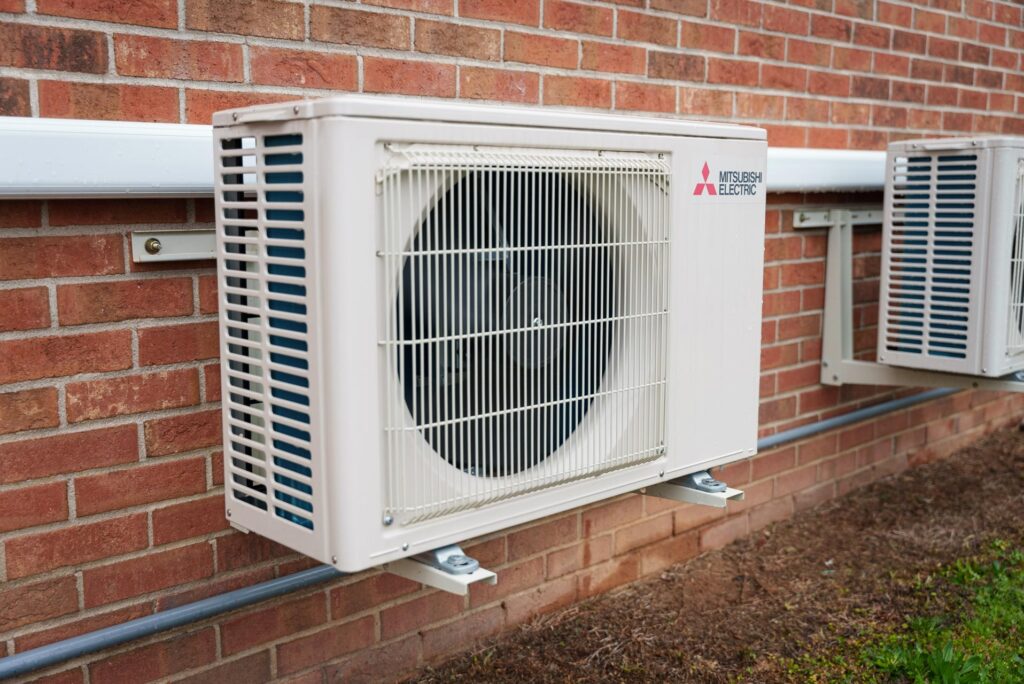
Most homes in the Columbia area heat with a heat pump, and that changes the sizing math in a way that is easy to miss. In cooling mode, a heat pump draws about what an air conditioner does. In heating mode on a cold night, it also runs electric auxiliary heat strips to make up for the heat it cannot pull from 30-degree air, and those strips draw 5,000 to 15,000 watts on their own depending on the system. A generator that carries the whole house comfortably during a July thunderstorm can be overwhelmed in a January ice storm, which is the outage when heat matters most. There are two answers: size the standby generator for the heat strips, which usually means a larger unit, or add a load management module that runs the heat pump but locks out the strips and other large loads when the generator is near capacity. A technician sizing a whole-home generator checks the equipment nameplate for the strip rating rather than guessing from the size of the house.
What a portable generator cannot do
A portable generator does three things poorly or not at all. It cannot run central air conditioning or a heat pump in most homes, because the starting surge exceeds what a portable can deliver. It cannot run anything wired into the house, such as a well pump, a furnace blower, or a hardwired sump pump, unless a manual transfer switch was installed by an electrician, since plugging a generator into a wall outlet pushes power back into the utility lines and can kill a line worker. And it cannot run unattended, because it needs refueling every several hours and produces carbon monoxide that has to be kept far from the house. A portable generator keeps food cold and lights on, but it does not keep a Columbia house cool in August or warm in an ice storm.
What a standby generator can do (if it is sized right)
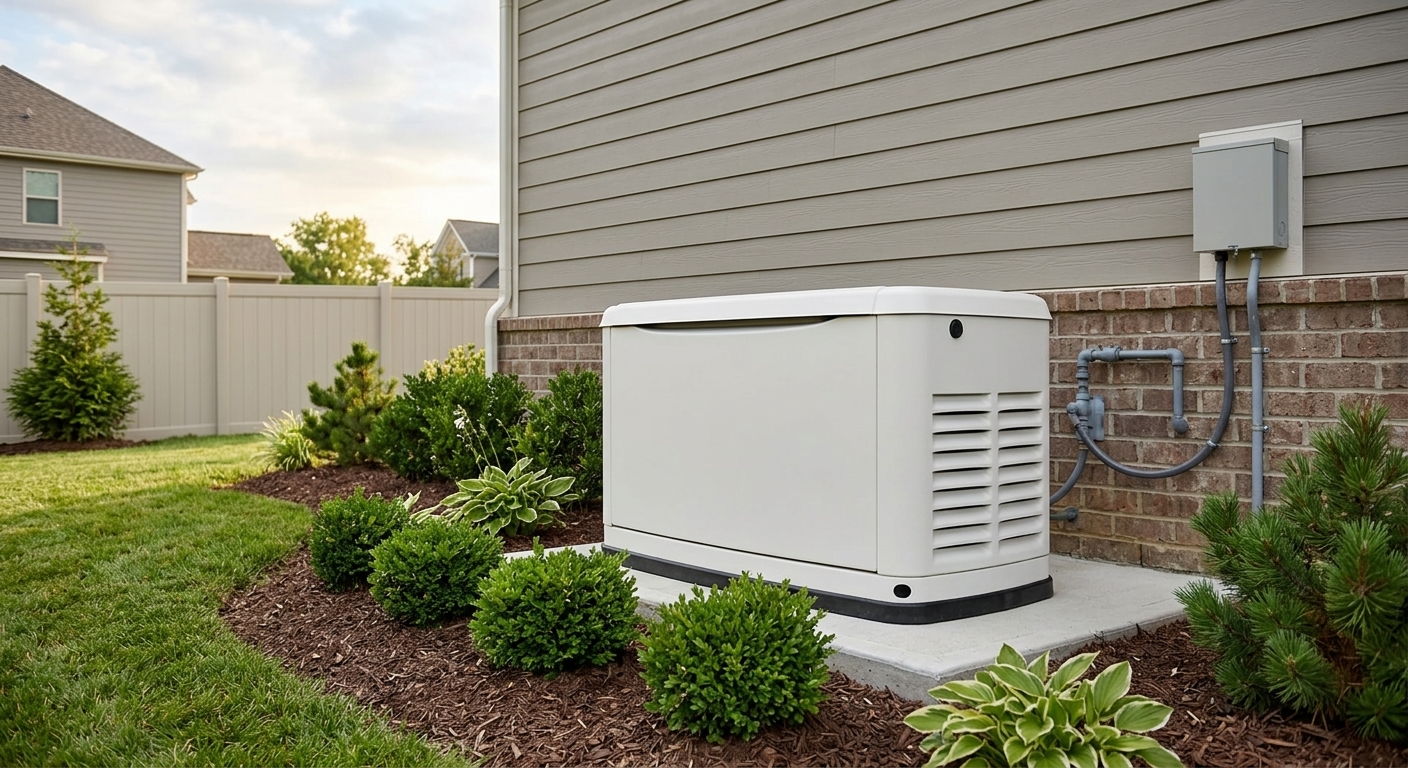
A standby generator connected through an automatic transfer switch runs the circuits it was designed for without anyone starting it or plugging anything in. A smaller unit in the 10 to 14 kilowatt range typically covers essential circuits: refrigeration, the well or sump pump, the furnace or a portion of the heating system, lights, and outlets. A larger unit in the 18 to 26 kilowatt range covers a typical whole house, including air conditioning, and with load management it can handle the heat strips as well.
Managing load during an outage
Start large loads one at a time and let each settle before adding the next. Skip the electric range, the dryer, and the dishwasher unless the generator was sized for them. Keep the thermostat set a few degrees warmer in summer and cooler in winter so the system cycles less. Once the outage is over, note what ran and what did not; that list is the best input for deciding whether the generator you have is the one you need, and our generator service visits include a load review for that reason.
Find out what yours will carry
2nd Wind Heating & Air Conditioning installs and services standby generators across the Columbia area. If you are not sure what your current generator will carry, or you are deciding what size to buy, schedule a visit online or through the 24/7 chat on our website. A technician will total your loads from the equipment itself, explain what the numbers mean for your home, and give you a firm price for whatever the math says you need.