
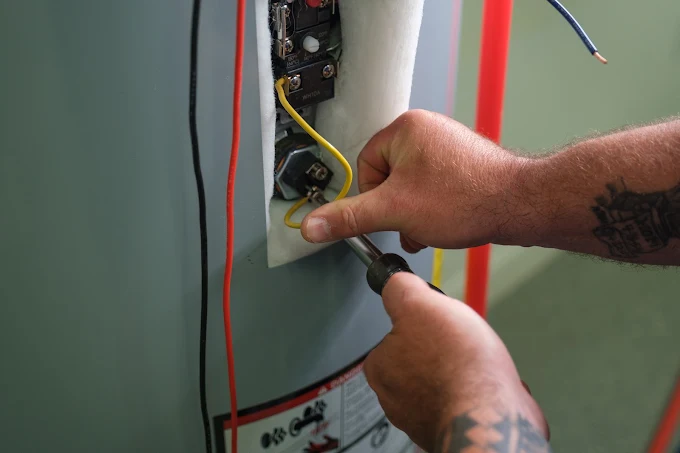
A fall water heater check looks different for a tank and a tankless unit. A tank needs its sediment flushed, its anode rod inspected, its relief valve tested, and its temperature confirmed. A tankless unit needs a descaling flush through its service valves, its inlet filter cleaned, and its venting checked. Both need the check before November, because incoming water gets colder as fall deepens and a house full of holiday guests adds showers, laundry, and dishes to a heater that is already working harder than it did in July.
Columbia’s water comes into the house in the 80s in late summer and drops into the 50s by December. Every degree of that drop is a degree the heater has to add, which is why a tank that kept up all year starts running short the week the relatives arrive.
The Tank Checklist
Flush the sediment. Minerals in the supply settle at the bottom of the tank, and on a gas heater that layer sits between the burner and the water, so the burner runs longer to heat the same tank. The rumbling or popping you may hear is water boiling under the sediment. On an electric heater, sediment buries the lower element and shortens its life. Draining a few gallons through the drain valve clears it.
Inspect the anode rod. The rod is a piece of metal inside the tank that corrodes so the tank does not, and once it is used up, usually after three to five years, the tank starts rusting from inside. Replacing a depleted rod is the single most effective way to extend a tank’s life, and it only happens when someone opens the tank to look.
Test the temperature and pressure relief valve. The valve opens if the tank overheats or over-pressurizes, and a valve seized with mineral deposits cannot. Lifting the lever briefly should release water and then stop. A valve that drips afterward or does not release needs replacing, and a plumber also checks for an expansion tank on homes with a pressure reducing valve, since a closed system builds pressure every time the water heats.
Confirm the setting. The U.S. Department of Energy recommends 120 degrees, which delivers plenty of hot water, lowers scalding risk, slows scale, and reduces standby heat loss.
The Tankless Checklist
Descale the heat exchanger. A tankless unit heats water as it passes through a compact heat exchanger, and minerals coat that exchanger over time, cutting the unit’s output and eventually triggering error codes. A descaling flush with a pump and a food-grade solution through the service valves restores it, and manufacturers often tie the warranty to doing it annually. Homes on wells or on supplies with heavier minerals need it more often.
Clean the inlet filter. A small screen on the cold inlet catches sediment and clogs over a year, which shows up as reduced flow and lukewarm water.
Check the venting and the condensate drain. Gas tankless units vent outside through dedicated pipe, and condensing models produce acidic condensate that drains through a neutralizer. Both need a look before the heavy-use season.
Signs Either Type Is Near the End
- Rusty or discolored hot water, which means the tank is corroding inside.
- Water pooling around the base of a tank.
- A rumble that does not stop after flushing.
- Hot water that runs out faster than it did last year, or a tankless unit that cycles cold during a shower.
- Error codes that return after a reset.
- A tank past ten years or a tankless unit past fifteen that has never been descaled.
Tank or Tankless for the Replacement?
A tank heater typically lasts eight to twelve years, and a tankless unit around twenty with annual descaling. When the fall check turns into a replacement conversation, the choice depends on how the household uses hot water. A tank suits a home that draws hot water in bursts and has room for the unit. A tankless water heater suits a home that runs out, since it supplies hot water continuously as long as the flow stays within its rating, and it fits in a closet or on a wall where a tank would not. Sizing a tankless unit for Columbia means accounting for the 50-degree incoming water in winter, which reduces the flow it can heat compared with the summer number on the box.
Scheduling the Check
A homeowner can confirm the temperature setting and look for leaks. Sediment flushing, anode inspection, relief valve testing, descaling, and venting checks belong to a licensed plumber with the right tools, and all of them fit in one visit. 2nd Wind has served Columbia and the surrounding Midlands since 1985, and because we handle plumbing and HVAC together, the water heater check can share a visit with the fall heating tune-up. Members of our Cloud 10 Membership also receive savings on water heater equipment when a replacement is the right call. Schedule online or reach our team through 24/7 website chat, and we will make sure the hot water holds up through the holidays.
Frequently Asked Questions
Is it too late to flush a tank that has never been flushed?
Sometimes. A tank past ten years with a thick sediment layer can develop leaks when the sediment that was sealing a weak spot is disturbed, so a plumber may recommend leaving it and planning the replacement instead. On a younger tank, a careful first flush is still worthwhile. Ask before flushing an old tank yourself.
Why does my tankless water heater go cold in the middle of a shower?
Mineral scale on the heat exchanger, a clogged inlet filter, or a flow rate below the unit’s minimum can all cause it, and so can a unit undersized for two fixtures running at once in winter, when the incoming water is coldest. Descaling and filter cleaning solve the first two. The third is a sizing question.
How much hot water do holiday guests add?
Each additional person adds a shower a day, and the laundry and dishes that come with a full house add several more hot water draws. A tank that is sized for two people struggles with six, and a tankless unit sized only for summer incoming water falls short in December. Spacing showers and running the dishwasher at night helps a tank keep up.
Does a water heater need a permit to replace in Richland County?
Yes. Water heater replacement requires a plumbing permit and inspection in Richland County, Lexington County, the City of Columbia, and most surrounding municipalities, and a gas unit also involves the gas connection and venting. A licensed plumber handles the permit as part of the job.