
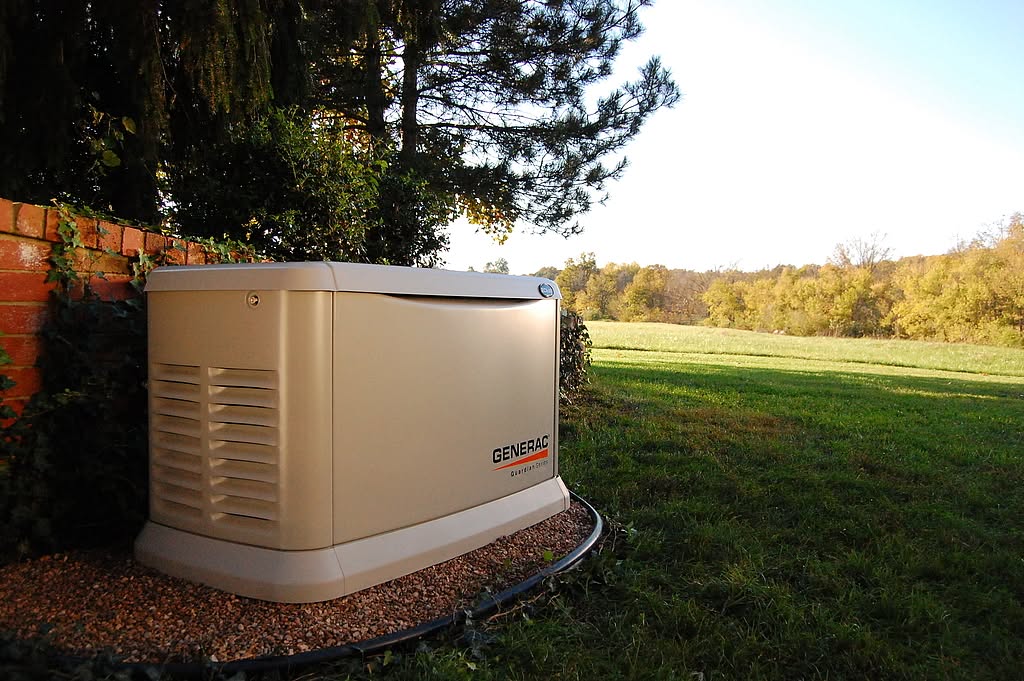
A standby generator in Columbia sits quietly for months at a stretch. Then a spring thunderstorm or the remnants of a tropical system asks it to start on the first try and run for two days, which can be a huge ask for a system which hasn’t been touched since last year. Whether it does comes down to four things. Each can be checked in spring, before the severe weather that runs from April into hurricane season. This checklist is organized around those four, with what you can look at yourself and what the yearly service visit adds to each.
1. The battery
The battery starts the engine and keeps the controller powered, and it is the part most likely to fail without warning. Batteries last two to four years, and Columbia’s summer heat pushes them toward the short end of that range. What you can check yourself is whether the weekly self-test is still happening; note the day and time the unit is set to exercise, listen for it, and if you cannot remember the last time you heard the generator run, that is the most important item on this list. A slow crank during the self-test is a battery on its way out. What the service visit adds is a load test, which is the only way to know whether the battery will turn a cold engine, and replacement on schedule rather than after a failure.
2. The fuel
On a standby unit, the fuel is natural gas or propane, and neither goes stale. However, the supply can fail slowly. What you can check is the propane tank gauge, which should be above half heading into storm season, and the shutoff valve, which should be open. What the service visit adds is a check of fuel pressure and the regulator, since a regulator that has drifted produces a generator that starts and then surges or stalls under load. If you rely on a portable generator, gasoline that sat over the winter has likely left varnish in the carburetor, and draining or treating it and running the unit for fifteen minutes is what makes the difference between a portable that starts in June and one that does not.
3. The oil
A generator that runs a few minutes a week loses oil slowly enough that nobody checks, and then an outage asks it to run for two days straight. What you can check is the ground under the enclosure for oil stains, which mean a leak that a long run will turn into an engine problem, and the oil level on the dipstick if you are comfortable opening the cabinet. What the service visit adds is an oil and filter change, a look at the source of any leak, and a replacement air filter and spark plugs as needed, which together are what let an engine run for days without harm.
4. The controls
The controller decides when the generator starts and what it does when something goes wrong, and it reports its condition through a status light and a fault log. You can check the light for an indication of how it’s running. Green means ready, yellow or amber means maintenance is due or a minor fault is logged, and red means a fault that will keep the unit from starting. People walk past yellow for months, but yellow is when service is inexpensive! What the service visit adds is a reading of the fault history, a test of the sensors that protect the engine, an inspection of the transfer switch that hands the house from the utility to the generator, and a run under a full load, which is the only test that shows whether the unit will carry the house rather than merely start.
Two more items for a Midlands spring
Beyond the four, two items belong on a Columbia list. The first is what has moved into the enclosure over the winter, since a generator cabinet is warm, dry, and attractive to mice and wasps, whose nests foul the controller and the air intake. The second is the space around the unit, which pine straw, leaves, and shrubs close in on over a season, and which needs to stay open so the unit can breathe and cool. Both are covered when the technician opens the cabinet, and both are worth a glance from the yard between visits.
Why spring
Severe thunderstorms arrive in Columbia in April and May, and the remnants of tropical systems follow from August into October. Homeowners who lived through the days-long outages after Hurricane Helene in 2024 know how long a generator can be asked to run. A service visit in March or April means the unit has been load-tested before any of that, and it means the appointment is a convenient one rather than a scramble the week a storm is in the forecast.
Scheduling the visit
2nd Wind Heating & Air Conditioning has served Columbia since 1985 and installs and services standby generators across the Midlands. Our home generators page covers what we can help with, and members of the Cloud 10 Membership receive 5 percent off generator equipment. Schedule the spring visit online or through the website chat at any hour, and the technician will walk you through what the load test showed.