

Owning a home in Columbia means owning systems that run harder than they would in most of the country. The air conditioning works from April into October, humidity is a year-round fact, and a short cold snap in January can find a pipe that nobody insulated. Many new homeowners here arrive from apartments or other climates, through Fort Jackson, Shaw Air Force Base, the university, and the region’s employers, and the rhythm of a Midlands home is not obvious to a newcomer. This guide lays out that rhythm by season, so you know what to do and when.
Spring: March through May
Spring is the time to get the cooling system ready before it starts its six-month shift. Book a cooling tune-up in March or April, before the first hot week fills every schedule in town. That visit cleans the coils, checks the refrigerant charge, tests the electrical parts under load, and clears the condensate drain, and it is the most cost-effective thing you will do for the house all year. Columbia’s spring pollen coats the outdoor coil in yellow dust and cuts its ability to shed heat, so rinse the coil gently after pollen season and keep shrubs and pine straw two feet back. Indoors, change the filter and start the monthly filter habit. In the plumbing, restart the irrigation system and check the backflow preventer for leaks, and look at the water heater’s base for moisture. If you have a standby generator, this is the time to schedule its annual service, ahead of summer storm season.
Summer: June through September
Change the filter every month while the system runs daily, and check the drain pan under the indoor unit monthly, since the condensate line clogs with algae over a wet season. Keep the outdoor unit clear of grass clippings and pine straw. Summer is also storm season, and a Columbia thunderstorm can take the power out on the hottest afternoon of the year. Know where your breaker panel and main water shutoff are before you need them in the dark. Test the sump pump if you have one, since the storm that fills the crawl space is the storm most likely to cut the power. Look under the crawl space once in summer with a flashlight for standing water, fallen insulation, or a musty smell.
Fall: October and November
Fall is the window for getting two systems ready at once. Book a heating tune-up in October, before the first cold morning arrives near the end of the month. On a heat pump, the technician tests the auxiliary heat strips that only run on cold nights and fail silently until then. On a gas furnace, the visit includes a heat exchanger inspection for cracks that can leak carbon monoxide into the house, and this is also the month to test the carbon monoxide detector and replace its battery. In the plumbing, fall is the time to disconnect and drain hoses, cover the outdoor spigots, shut down the irrigation system, flush sediment from the water heater, and have any slow drain cleared before the holidays fill the house. Fall is also when to have the dryer vent cleaned, because lint in a long vent run is a leading cause of house fires. Clean the gutters after the leaves drop; water that overflows a clogged gutter ends up in the crawl space.
Winter: December through February
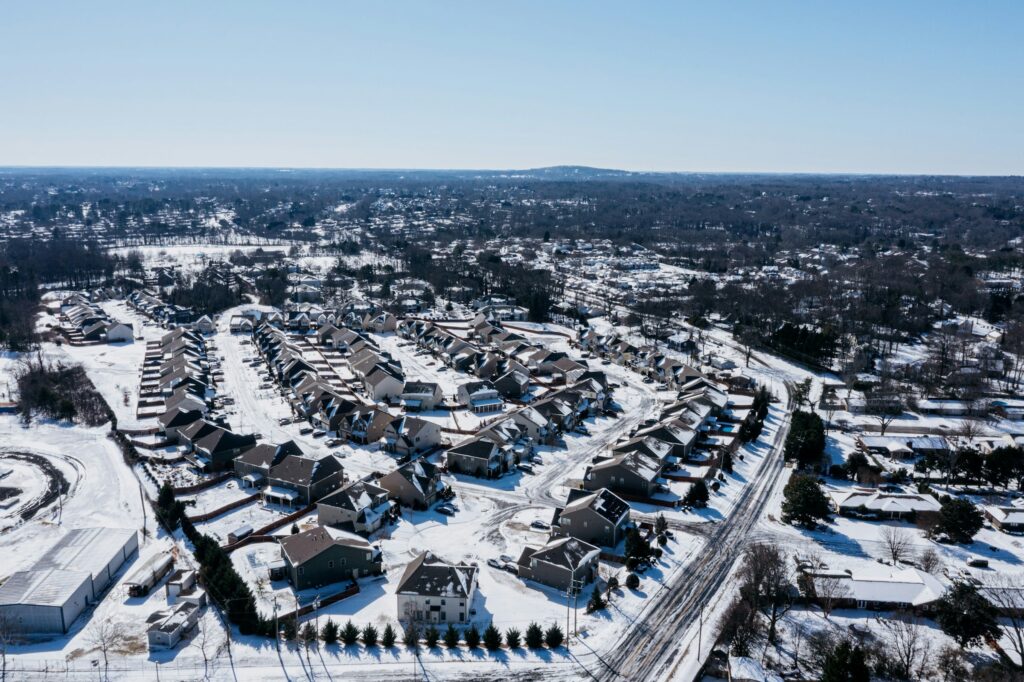
Winter maintenance here is about the handful of cold nights, not the season. When the forecast shows temperatures in the 20s, open cabinet doors under sinks on exterior walls, let a faucet drip at the far end of the house, and keep the thermostat at 55 or above even if you are away. Wrap any exposed pipe in the crawl space, garage, or attic with foam insulation your first year, and you will not have to think about it again. If the power goes out in an ice storm, remember that neither a heat pump nor a gas furnace runs without electricity, which is the winter argument for a standby generator if your street loses power often. Winter is also a good time to record the age of every system, from the water heater label to the outdoor unit nameplate, so you know what is coming.
The habits that run all year
A few things do not belong to a season. Change the filter on schedule. Keep grease out of the kitchen drain and wipes out of every toilet. Test smoke and carbon monoxide detectors twice a year and replace the units when they pass their stated life. Watch the water bill for a jump with no change in the household, which is the earliest sign of a hidden leak. And keep a folder of maintenance records, because many equipment warranties require proof of service.
What to leave to a professional
Filters, hoses, spigots, thermostat settings, detectors, and looking are homeowner tasks. Refrigerant, gas, high voltage, the heat exchanger, and the inside of a water heater are a professional’s, both for safety and because the tests that matter require equipment. The simplest way to keep the two professional visits on the calendar is a maintenance plan. The Cloud 10 Membership schedules the spring and fall visits each year, includes coil cleaning at every service, and gives members priority scheduling when the first heat wave arrives, which removes the hardest part of maintenance, remembering.
Start with a baseline visit
2nd Wind Heating & Air Conditioning has served greater Columbia since 1985. If you have recently bought a home here, a good first step is a maintenance visit that establishes the condition and age of the heating and cooling system, followed by a plumbing inspection that does the same for the water heater and the crawl space. Schedule online or through the 24/7 chat on our website, and the technician will show you on video what you own and what it needs.