
Every experienced homeowner has a first-house mistake story, and the stories tend to repeat themselves with every generation. The same handful of errors show up in Columbia homes year after year, and most of them come from habits carried over from renting, where the landlord handled the systems and the climate was somebody else’s problem. Here are the mistakes we see most often, why each one causes trouble in this particular climate, and the habit that replaces it.
Never changing the filter
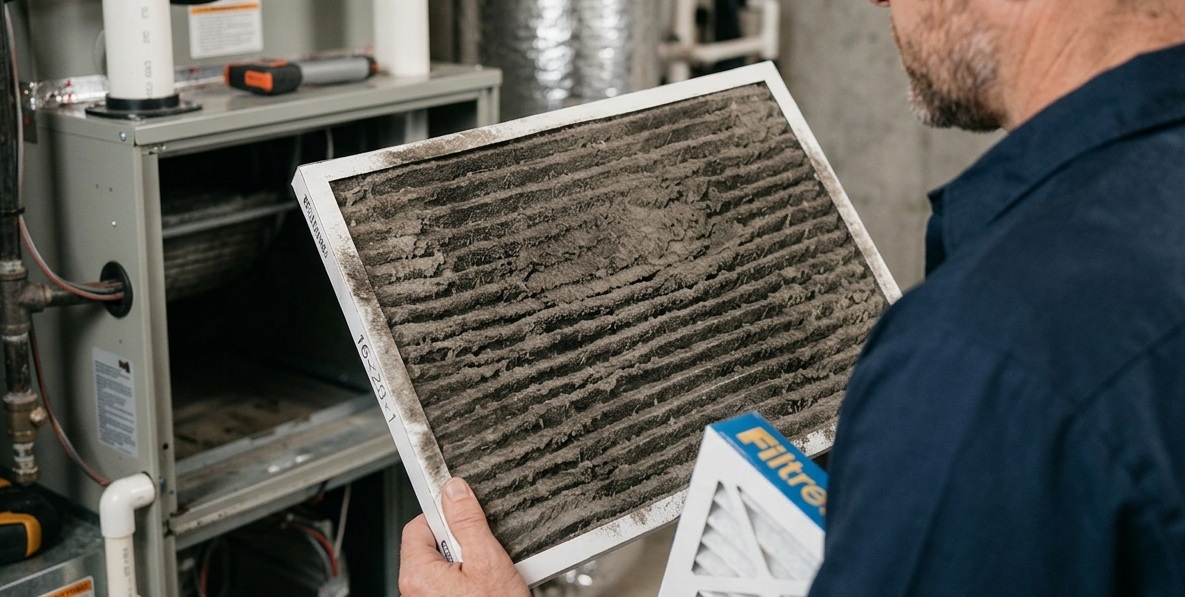
This is the most common mistake and the most expensive one over time. In an apartment, someone else may have changed the filter. In a house where the air conditioner runs six months of the year, a filter clogged with dust and pet hair chokes airflow, freezes the indoor coil, overheats the blower, and runs the power bill up every month it stays in. The fix is a habit: check it monthly during cooling season and change it every one to three months.
Running the thermostat like an apartment
Renters often set the thermostat to 68 in summer because the space may be smaller (and therefore cheaper) to cool. In a house in Columbia, that setting keeps a system running continuously through the afternoon, stresses the compressor, and costs more every month without making the house much cooler, since an air conditioner cools at one rate regardless of the set point. The habit that replaces it is setting the thermostat in the mid to upper 70s, using ceiling fans for the rest, and leaving it there. A smart thermostat that follows a schedule removes the temptation to cool things down after coming in from a walk on a hot, humid day.
Not knowing where the shutoffs are
New homeowners routinely discover the main water shutoff while water is running across the floor. The same goes for the breaker panel and the gas shutoff. Find all three the week you move in, make sure the water valve turns, and show everyone in the house. In a Columbia home, the water main is often in the crawl space or at the meter near the street, and a valve that has not been turned in years may not turn at all.
Ignoring the water heater
First-time homeowners rarely know the water heater’s age or that it needs anything, and it does. Sediment settles in the tank every year and should be flushed out, the anode rod that protects the tank from corrosion is used up after about five years, and a tank past ten years is living on borrowed time. Find the manufacture date on the label the first month you own the house. If the heater sits in an attic or a closet over finished space, as many Columbia water heaters do, its eventual failure will take a ceiling with it. A water heater that is flushed yearly and replaced on schedule is a routine expense; one that fails in December is not.
Treating the drains like a garbage can
Grease down the kitchen sink, wipes down the toilet, coffee grounds and potato peels into the disposal: habits a rental tolerated for a year and a house will not. Grease hardens in the pipe, wipes do not break down despite the label, and fibrous food wraps around the disposal blades. The first Thanksgiving in a new house is when these habits produce their first backup. Pour grease in a can, keep a trash can in every bathroom, and use the disposal for small scraps only.

Forgetting the outdoor unit exists
The outdoor unit sits in the yard, and new homeowners tend to treat it as part of the landscaping. Shrubs grow up against it, pine straw and grass clippings pile against the coil, a sprinkler head sprays it every morning, and in spring, Columbia’s pollen coats it yellow. All of that stops the coil from shedding heat, and the system runs longer and hotter for it. Keep two feet clear on every side, rinse the coil gently after pollen season, and never stack anything on top of it.
Skipping the tune-ups
The most costly mistake is also the quietest. A heating and cooling system that never receives professional maintenance still works, right up until it does not, and it costs more every month in between. New homeowners skip tune-ups because nothing seems wrong, and then learn two things at once: that the compressor failed years early, and that the manufacturer will not honor the warranty without service records. In Columbia’s climate, a spring and a fall maintenance visit are the difference between a 10-year system and a 15-year one. The Cloud 10 Membership exists so that new homeowners do not have to remember to book them.
Assuming the inspection covered it
The home inspection you paid for at closing confirmed that the systems worked on the day of the inspection. It did not tell you the refrigerant charge, the condition of the coils, the age of the heat strips, or how much life the water heater has left, because inspectors do not have the equipment or the time to test those things. Many first-time homeowners treat a clean inspection report as a maintenance record, and it is not one. A baseline maintenance visit in the first few months of ownership establishes the condition of the systems.
Attempting DIY on tasks that need an experienced technician
Filters, hoses, spigot covers, thermostat settings, and detectors are easy homeowner tasks. However, anything dealing with refrigerant, gas lines, high-voltage components, the heat exchanger, and the inside of a water heater are not, and the online videos that suggest otherwise leave out the injuries and the voided warranties.
Start your new home on the right foot
2nd Wind Heating & Air Conditioning has served greater Columbia since 1985. If you have recently bought a home, schedule a baseline maintenance visit online or through the 24/7 chat on our website. The technician will show you the condition of your systems on video, tell you the age of each, and help you set up the habits that keep this list from applying to you.