
Indoor air quality drops in winter because the house stays sealed, the appliances that burn fuel run more, the dryer runs more, and the air dries out. Columbia’s version of winter is short, roughly December through February, which means the drop is concentrated into a few weeks rather than spread across a long season. Those are the weeks to pay attention to the furnace or gas pack, the fireplace, the dryer vent, the filter, and the humidity reading, and the fixes for each are inexpensive compared with living with the air.
The rest of the year, a Midlands home breathes. Windows open in March and October, the air conditioner wrings humidity out all summer, and the doors are open to the porch. In January, none of that happens, and whatever is in the air stays there. You need to plan accordingly.
The Sealed-House Weeks
When a house is closed up, the air exchange that carried pollutants outside slows to whatever leaks through the walls. The EPA notes that some pollutants run two to five times higher indoors than outdoors, and the gap widens when ventilation drops. Cooking fumes, cleaning product vapors, pet dander, dust, and fireplace smoke all build up faster in the weeks the house is shut.
Most Columbia winter weeks include an afternoon in the 60s, and twenty minutes of open windows on one of those days clears more from the air than any piece of equipment. Between those days, only the HVAC filter is pulling particles out, so a filter installed in October is often loaded by Christmas.
Combustion: Furnaces, Gas Packs, Gas Logs, and Fireplaces
Carbon monoxide comes from everything that burns, and December is when the furnace, the water heater, the gas logs, and the fireplace are all burning in the same week. A furnace or gas pack sends its exhaust up a flue, and a crack in the heat exchanger or an obstruction in that flue diverts part of it into the house. Midlands homes are full of gas logs and wood-burning fireplaces, which add their own exhaust whenever a damper leaks or a chimney goes too long between cleanings. A heating tune-up before the season includes the heat exchanger, the burners, and the venting, and working carbon monoxide detectors on every level are the backup for everything an inspection cannot predict. Never warm a room with a gas oven or an unvented fuel-burning heater.
The Dryer Vent
Laundry does not slow down in winter, and the dryer vent is the part of indoor air quality nobody thinks about. A vent run clogged with lint traps moisture and heat in the laundry room, backs humid air into the house, and lets fine lint particles escape around the dryer. It is also a fire risk, since the U.S. Fire Administration counts about 2,900 home dryer fires a year with failure to clean the vent as the leading cause. A dryer that takes two cycles to dry a load, or a laundry room that feels warm and damp while the dryer runs, is the sign. Our dryer vent cleaning service clears the full run from the dryer to the exterior wall.
Dry Air
Winter air carries little water, and heating it inside the house drives the relative humidity down fast. Against the EPA’s 30 to 50 percent target, a Columbia house with no humidity control routinely reads in the 20s during a cold snap. At that level dust and dander float longer, every doorknob delivers a shock, and the thermostat gets pushed up to compensate for air that feels colder than it is. Weatherstripping and caulk keep the dry air out, and a whole-home humidifier on the ductwork puts moisture back and holds the setting you choose.
Filtration and Purification
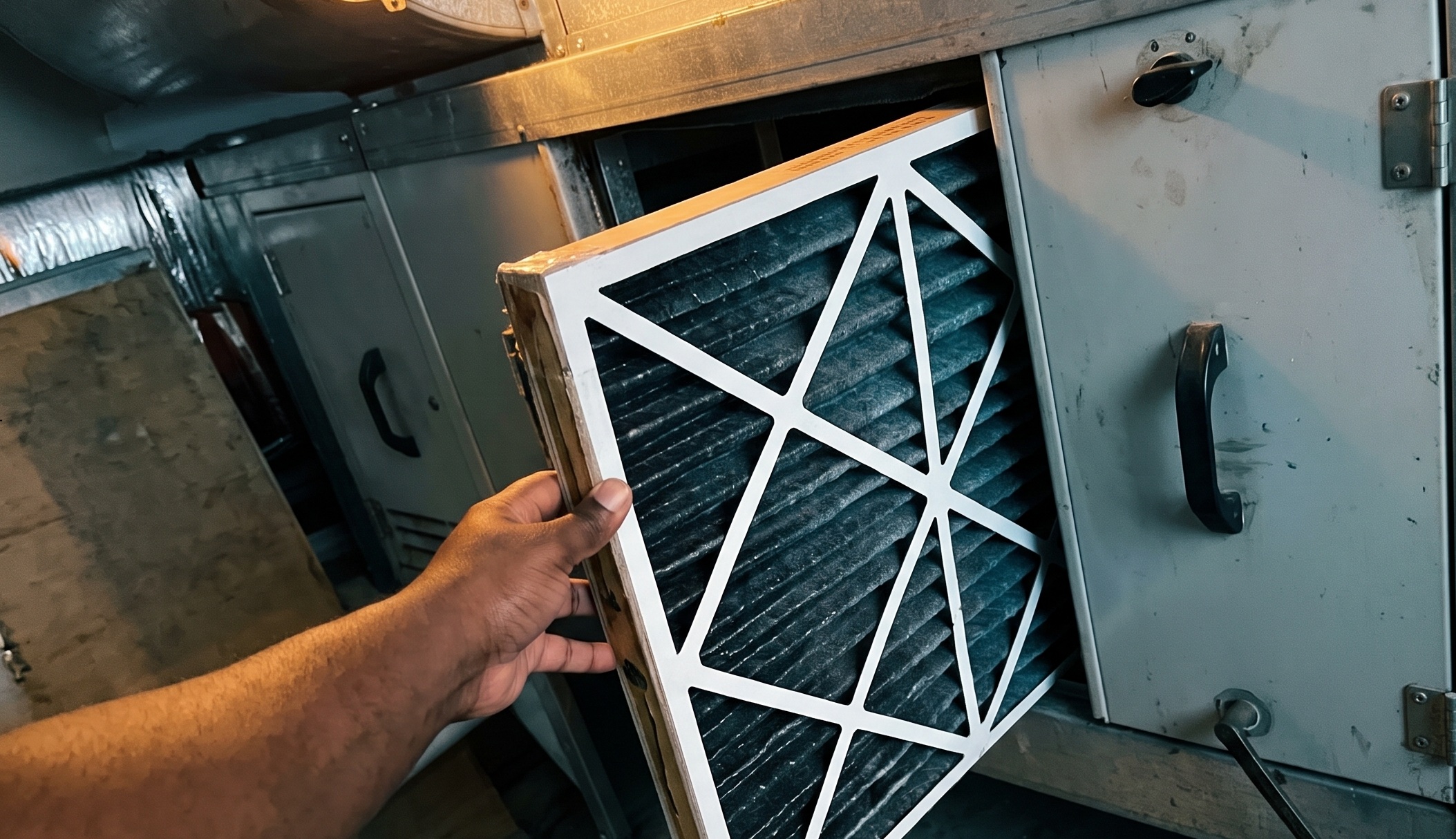
The filter does the work of removing particles in a sealed house. A pleated filter rated MERV 8 to 11 captures dust, dander, and most pollen, and it needs changing when it loads up rather than on a fixed date. For a household that notices the air in winter, an in-duct air scrubber works on odors and contaminants a filter does not catch, and it runs whenever the blower runs. Duct cleaning and sealing address the dust that settled in the ductwork over the summer and gets stirred into the air every time the heat cycles on.
A Short Winter List
- Put in a fresh filter before the heat runs for the first time, and look at it again after the holidays.
- Have the furnace or gas pack inspected before the season, heat exchanger and venting included.
- Test carbon monoxide and smoke detectors and replace batteries.
- Have the dryer vent cleaned if it has been more than a year.
- Run kitchen and bath exhaust fans while cooking and showering.
- Open windows for twenty minutes on the mild afternoons Columbia reliably provides.
- Check indoor humidity with a hygrometer and act when it drops below 30 percent.
Getting Your Home’s Air Looked At
2nd Wind has served Columbia and the surrounding Midlands since 1985 across heating, cooling, indoor air quality, plumbing, and generators, which means the furnace inspection, the dryer vent, and the humidifier can happen in one visit. Our trained experts look at your whole system before recommending indoor air quality equipment, and you hear the options explained rather than a package pitch. Schedule online or reach our team through 24/7 website chat, and we will help you get through the sealed-house weeks with better air.