
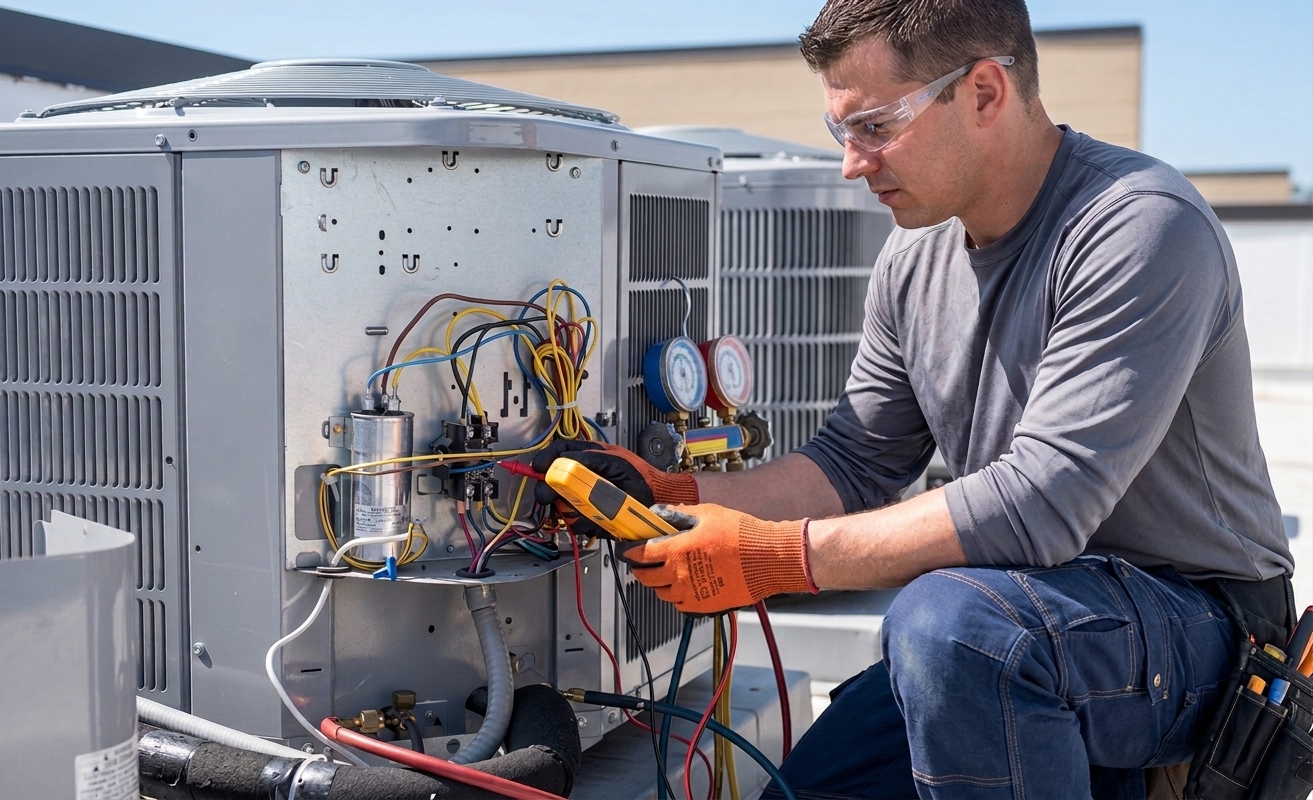
The most expensive heating and cooling repairs almost never start as expensive problems. They start as a part that is a weak, a sound that is new, or a bill that becomes higher over time, and they become expensive because the system keeps running with the problem in it. In a climate where the air conditioner runs six months of the year, that running adds up fast. Here are six common problems, what each one looks like early, and what it turns into when service waits until a better time.
1. A weakening capacitor
The capacitor is a small cylinder that gives the compressor and fan motors the jolt they need to start. When it weakens, the motors start hard, hum before they turn, or take a second try, and the system still runs, so the symptom is easy to live with. What is happening inside is that a motor forced to start on a weak capacitor draws more current every time, which heats its windings and shortens its life. Replaced early, a capacitor is one of the least expensive parts in the system. Left alone, it takes the compressor with it, which is the most expensive part.
2. A small refrigerant leak
A system that is slightly low on refrigerant still cools, just not as well and not as efficiently. Many homeowners notice only that the house takes longer to cool in the afternoon and the bill has crept up. As the charge drops further, the indoor coil begins to freeze, the system runs longer and longer to reach the set point, and the compressor operates outside the conditions it was designed for. Eventually the compressor overheats and fails. A leak found during a maintenance visit is a repair and a recharge. The same leak found two summers later is often a compressor, a coil, and a refrigerant charge, and on an older system that might mean replacement.
3. A clogged condensate drain
Air conditioning pulls gallons of water out of Columbia’s humid air every day, and all of it leaves through a small drain line. Algae and sludge build up in that line every season. Early on, the only sign is a little water in the pan under the indoor unit or a musty smell when the system starts. Then the pan overflows. If the unit is in the attic, the overflow finds the ceiling below it, and if the unit is in a closet, it finds the floor and the wall. A float switch, when one is installed and working, shuts the system down before that happens, which is why so many no-cooling calls on hot days turn out to be a drain line. Clearing and treating the line is part of routine maintenance.
4. A dirty coil
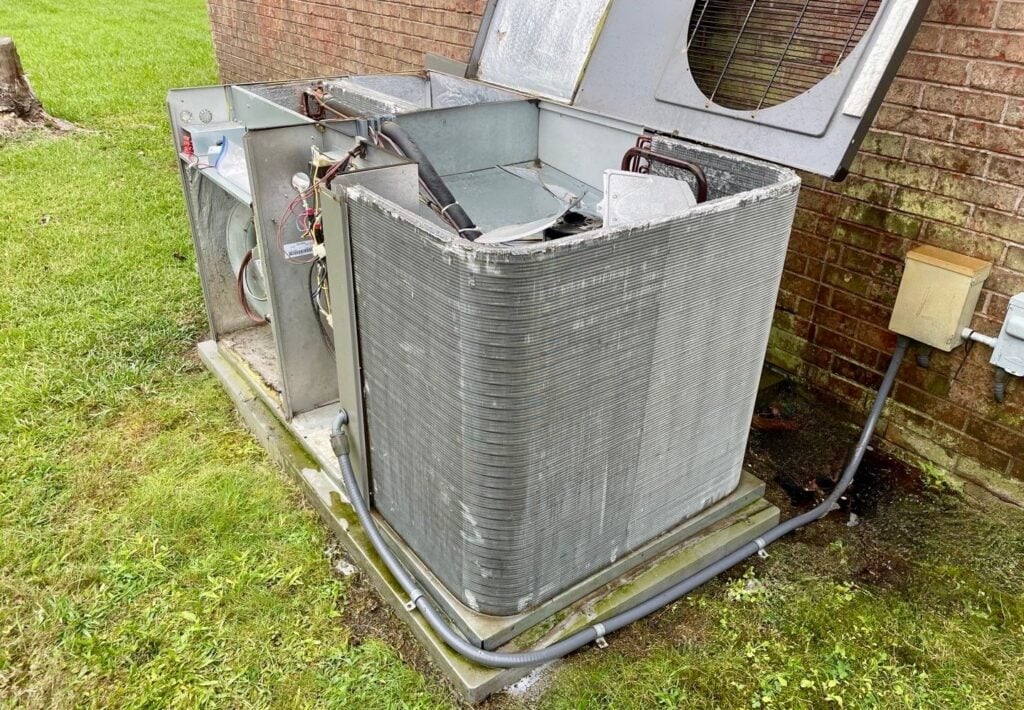
The outdoor coil sheds heat and the indoor coil absorbs it, and both do their job through thin metal fins that clog with pollen, dust, and pet hair. A dirty coil does not fail. It just makes the system run longer for the same result, so the first symptom is the power bill. The second symptom arrives when the indoor coil is dirty enough to restrict airflow and freeze over, or the outdoor coil is dirty enough that the compressor runs hot. Coil cleaning is a standard part of a tune-up, and the cost of skipping it is paid every month in run time until the season the compressor gives out.
5. Short cycling
A system that starts and stops every few minutes instead of running in steady ten to twenty minute cycles is short cycling, and the causes range from a dirty filter and a frozen coil to a failing control or a system that was oversized on the day it was installed. Every start is the hardest moment in a compressor’s life, and short cycling multiplies them. It also stops the system from dehumidifying, which is why a short-cycling house in Columbia feels clammy at 74 degrees. The compressor wears out years early, and the contactor that switches it on and off wears out with it. Finding the cause is a diagnostic visit, but replacing a compressor that short cycled for three summers often means replacing the system.
6. A leaking duct
Ducts in an attic run through air that reaches 130 degrees in a Columbia summer. A joint that has separated or a seam that has split pushes cooled air into that attic and pulls hot, humid attic air into the system. The house gets harder to cool, the system runs longer, and humidity indoors rises. Over time, the extra humidity feeds growth on the coil and in the ducts themselves, and the extra run time wears every part in the system. A duct leak found early is sealed and one that runs for years often means air duct cleaning or replacement on top of the repair.
Why waiting costs more here
Every one of these problems gets worse in proportion to how much the system runs, and in Columbia the system runs a great deal. A capacitor that would have lasted another winter in a cooler climate fails in July here. A drain line that would have stayed clear through a short summer clogs in a six-month one. The other cost is timing. Problems that were ignored in April fail in July, when every company in town is booked and the wait is longest. Members of the Cloud 10 Membership get priority scheduling in those weeks, but the better outcome is to have the problem found in April.
Have it looked at now
2nd Wind Heating & Air Conditioning has served greater Columbia since 1985. If your system is showing any of the early signs above, schedule air conditioning repair or a maintenance visit online or through the 24/7 chat on our website. The technician will show you the problem on video and give you the price to fix it now, which is the smallest price it will ever have.