
The weeks between Thanksgiving and New Year’s put more strain on a home than any other stretch of the year. Kitchens run all day, bathrooms serve twice the usual number of people, and in Columbia the season also brings the first chance of an ice storm and the power outages that come with it. The checklist below covers the plumbing and backup power items to handle in November, before the guests arrive and the service schedule fills up. Most of them take a few minutes; the rest are the ones to book now, while there is still room on the calendar.
The kitchen
The day after Thanksgiving is the busiest day of the year for plumbers, often revolving around clogged kitchen drains, a jammed garbage disposal, or a toilet with problems. Grease causes most of them. Fat from a turkey pan goes down the drain as a liquid and hardens into a plug as it cools inside the pipe, so pour it into a can and throw it away instead. Keep potato peels, celery, onion skins, pasta, rice, and bones out of the disposal, since they either wrap around the blades or swell and pack the drain line. Running cold water for fifteen seconds before and after you use the disposal helps too, because it carries waste all the way to the main line instead of letting it settle in the trap.
Pay attention to how the sink drains in the weeks before the holiday. A drain that empties slowly or gurgles is already partly blocked, and holiday volume will finish the job. Professional drain cleaning clears the whole line, which is a different result from punching a hole through the clog, and that is all a plunger or a bottle of chemical cleaner does.
Bathrooms
Guest bathrooms fail for two reasons: toilets that were already dealing with aging components, and items flushed that should not have been. Before guests arrive, check each toilet. If it needs a second flush, runs on its own, or rocks on the floor, schedule toilet repair now rather than in the middle of the visit. Then put a covered trash can and a plunger in every bathroom, because guests will flush wipes, cotton pads, and paper towels if the alternative is asking where the trash goes. Products labeled flushable still clog drain lines. The label refers to whether the product fits through the toilet, not whether it breaks down in the pipe.
The water heater
A tank water heater sized for your household will run short when the house doubles in size for a week. Staggering showers and running the dishwasher and laundry at night rather than during the morning rush helps a great deal. Before the season starts, flush the sediment from the bottom of the tank, since sediment is what makes a heater recover slowly between uses. Check the manufacture date on the label as well. A tank more than ten years old is most likely to fail under the added load of holiday week, so if yours is in that range, have it evaluated before the season rather than after. Among the water heater options, a tankless unit suits a household that regularly runs out of hot water, because it heats water on demand rather than storing a fixed amount.
Cold snaps
A December freeze in Columbia usually arrives overnight after a mild day. Disconnect hoses, cover the outdoor spigots, and wrap any exposed pipe in the crawl space or garage before guests come. When a freeze shows up in the forecast, open the cabinet doors under sinks on exterior walls and let a faucet drip at the far end of the house. If a guest bathroom sits over the crawl space or on an outside wall, that is the room most likely to lose water in a freeze, so check its pipes first.
Power outages
Ice storms cause most winter outages in Columbia. Freezing rain coats tree limbs and power lines, and the limbs come down on the lines. The February 2014 ice storm left hundreds of thousands of South Carolina homes without power, many of them for days, and the outages after Hurricane Helene in 2024 showed how long a large restoration can take. When the power goes out, more than the lights stop. A gas furnace will not run without electricity for its blower and controls, so the house goes cold. The water heater stops on an electric unit, and on most gas units with electronic ignition. A sump pump quits, and a refrigerator full of holiday food starts warming.
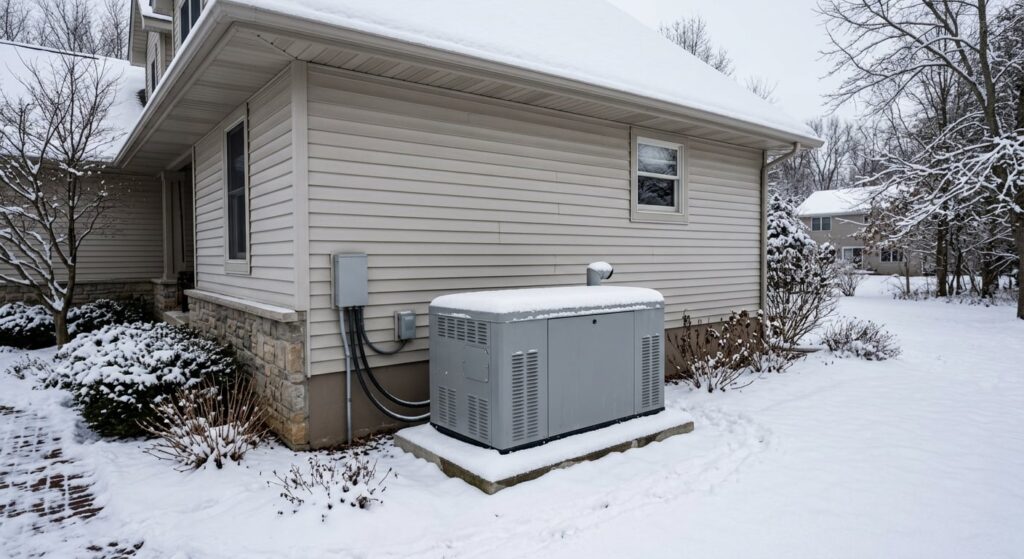
If you have a portable generator, run it for a few minutes now, check the fuel, and confirm you have the right cords and know which circuits it can carry. Never run a portable generator in a garage or near an open window, because carbon monoxide from generators kills people every winter. If you have a standby generator, confirm it has been completing its weekly self-test, and schedule its annual service if that has not been done yet. If you have neither, a whole-home standby generator starts automatically when the utility fails and keeps the heat, hot water, refrigeration, and any medical equipment running until the power returns. Fall is the time to plan one, because installation involves permitting and a gas or propane connection, and none of that happens the week of a storm.
Book what you cannot do yourself
2nd Wind Heating & Air Conditioning has served greater Columbia since 1985, and the weeks before Thanksgiving are the last comfortable window on our service schedule. If you need a drain cleared, a water heater flushed or replaced, or a generator serviced before the holidays, book online or through the 24/7 chat on our website. Handling it in November means the work happens on your timeline rather than in the middle of a house full of guests.