
The National Fire Protection Association counts about 160 home fires a year that start with Christmas trees and reports that Thanksgiving is the peak day for home cooking fires. Most of them start with something ordinary used a little carelessly.
Holiday home safety starts with the decorations, but it doesn’t end there. The tree, the lights, and the candles are the risks everyone knows. The space heater running in the guest room, the gas logs burning all evening, the generator rolled out after an ice storm, the dryer vent packed with a season of lint, and the kitchen drain taking a week of grease are the risks that fill our December schedule. Here is the full list for a Midlands home, with what to do about each.
Trees, Lights, and Candles
A fresh tree with a tight needle hold is far harder to ignite than a dry one. Cut two inches off the trunk, keep the stand full of water every day, and take the tree down once needles start dropping, which in a warm Columbia living room happens sooner than most people expect. Keep it three feet from fireplaces, space heaters, and heating registers.
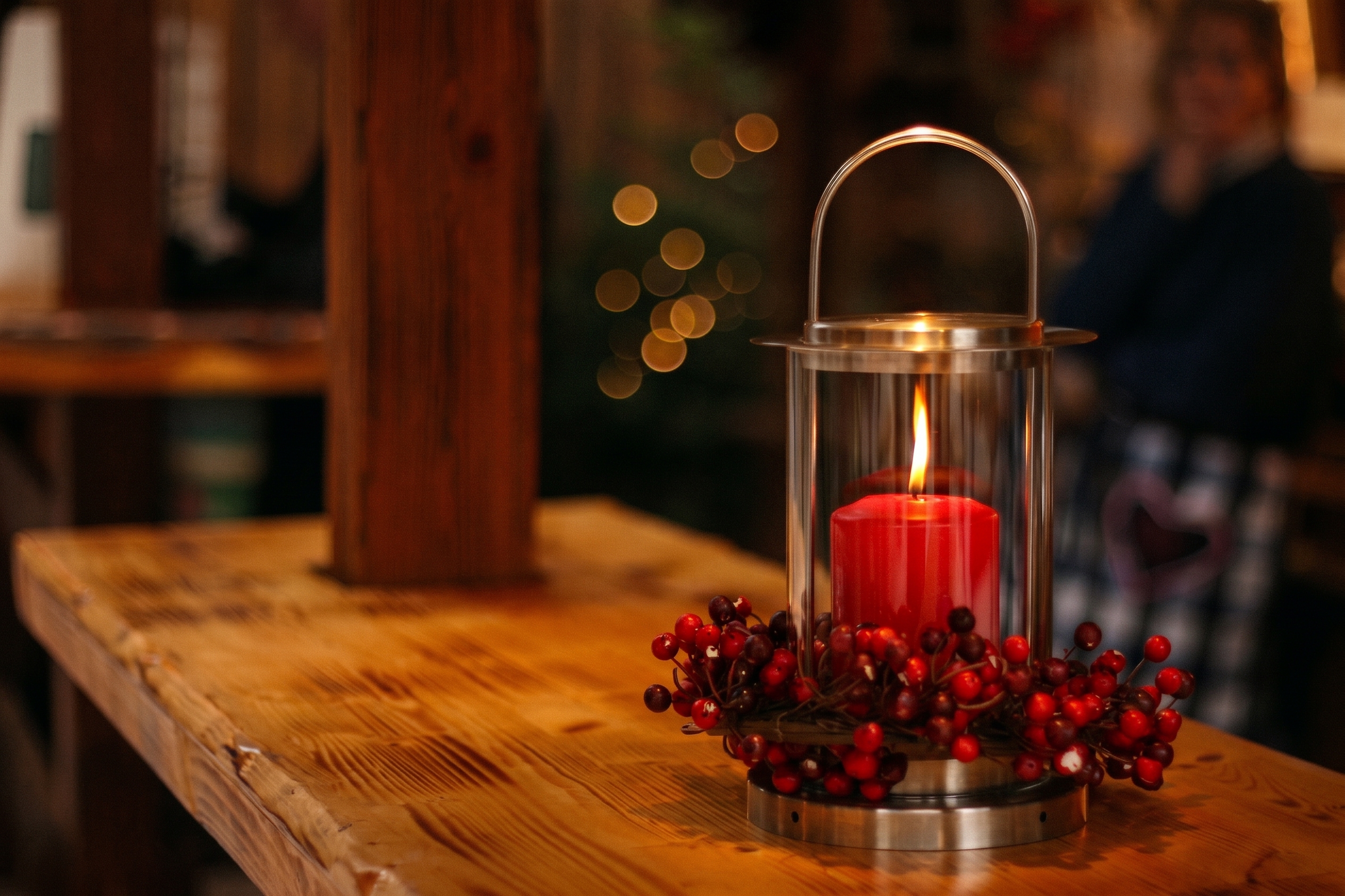
Light strings carry a label with the maximum number that can be connected end to end, often three for incandescent and many more for LED, and exceeding it heats the thin wire inside the first string. Inspect every string for cracked sockets and frayed wire, use outdoor-rated lights outdoors on GFCI-protected outlets with in-use covers, and put everything on a timer. The NFPA counts about 20 home candle fires a day nationally in December. Keep candles a foot from anything that burns and never in a bedroom, or switch to LED candles, which have become convincing enough that many households have.
If outlets feel warm, lights dim when a display comes on, or a breaker trips repeatedly through December, the circuit is overloaded, and that is a licensed electrician’s job.
Space Heaters and the Furnace
Space heaters cause more home heating fire deaths than any other type of heating equipment, according to the NFPA, and the holidays are when they come out for the guest room and the drafty den. Give one three feet of clear space on every side, plug it directly into a wall outlet, never into an extension cord or power strip, and turn it off when you leave the room or go to sleep. A guest room that needs a space heater every year is a room with an airflow or insulation problem, and a heating tune-up before the season confirms the furnace or heat pump can carry the whole house so the heater can stay in the closet.
Carbon Monoxide: Gas Logs, Furnaces, and Generators
Gas logs and wood-burning fireplaces run for hours on holiday evenings, and both produce carbon monoxide. A damper that does not seal, a chimney that has not been cleaned, or a vent-free gas log set run longer than the manufacturer allows lets some of that gas into the room. The furnace adds its own share if the heat exchanger has a crack or the flue is blocked, which the fall inspection catches. And after an ice storm, portable generators appear in garages and carports across the Midlands, which is where carbon monoxide poisonings happen. A portable generator runs 20 feet from the house, outdoors, with the exhaust pointed away, and a standby home generator removes the question. Test every carbon monoxide detector before the first guest arrives.
The Dryer Vent
A house full of guests means a dryer that runs all week, and a vent packed with a year of lint is both a fire risk and an efficiency drain. The U.S. Fire Administration estimates about 2,900 home dryer fires a year, with failure to clean the vent as the leading cause. A dryer that takes two cycles to dry a load, or a laundry room that feels hot and humid while it runs, is the sign. Our dryer vent cleaning service clears the full run from the dryer to the exterior wall, and December is the month it pays off.
The Kitchen Sink
Thanksgiving week is the busiest week of the year for kitchen drain calls, and Christmas week is close behind. Turkey fat, gravy, and butter go down the sink as liquids and harden inside the pipe, and a disposal that is asked to handle potato peels, rice, and celery adds to the mat. Pour grease into a can for the trash, scrape plates before rinsing, run cold water while the disposal works, and keep a strainer in the drain. If the sink slows after the big meal, a plunger and a hand snake come before any chemical cleaner, and a drain that backs up along with a gurgling toilet is a main line problem that needs drain cleaning rather than another bottle.
Hot Water for a Full House
Six guests add six showers a day to a water heater that was sized for two people, and the incoming water in December is 30 degrees colder than it was in August. Set the heater to 120 degrees, space the showers, run the dishwasher at night, and have a water heater past ten years old checked before the house fills. A tankless water heater solves the full-house problem permanently for households that host every year.
Cooking
Stay in the kitchen while anything is frying, grilling, or boiling, keep towels and packaging away from burners, and keep a lid nearby to smother a pan fire. Never pour water on a grease fire. Fry a turkey outdoors, far from the house and the deck, with the bird fully thawed and the oil level marked ahead of time.
One Company for the Whole List
Because 2nd Wind handles heating, cooling, indoor air quality, plumbing, drains, and generators under one roof, the furnace inspection, the dryer vent, the water heater check, and the generator service can happen in one visit before the season. We have served Columbia and the surrounding Midlands since 1985, our trained experts do it right the first time, and same-day service for residential customers is arranged by phone when the sink backs up on Thanksgiving. Schedule online or reach our team through 24/7 website chat, and enjoy the season without the worry.
Frequently Asked Questions
How long can vent-free gas logs run safely?
Vent-free gas log sets release their combustion products into the room, and manufacturers limit continuous operation, often to a few hours, and require a window cracked for fresh air. A carbon monoxide detector in the room is not optional. Vented gas logs behind a working damper have no such limit, which is why many homeowners prefer them.
Is it safe to leave a space heater on overnight in a guest room?
No. The NFPA’s guidance is to turn space heaters off when leaving the room or going to sleep, because a heater tipped by a blanket or a pet, or left too close to bedding, is the most common home heating fire scenario. A heating system that keeps the guest room warm on its own is the safer answer.
Why does my kitchen sink smell after a holiday meal?
Grease and food residue coating the drain line and the disposal grow bacteria within a day or two, and the smell rises from the drain. Running cold water with a few ice cubes through the disposal, followed by hot water, clears most of it. A smell that returns quickly means buildup farther down the line that a drain cleaning clears.
Can I run the dishwasher and take a shower at the same time?
You can, but a tank water heater delivers both from the same reserve, and the shower will run cooler as the tank drains. Running the dishwasher at night, after the showers, lets the tank recover. A tankless unit sized for the household supplies both at once as long as the combined flow stays within its rating.
Should I turn the heat down when the house is full of guests?
A little. Twenty people, a running oven, and holiday lights add heat to a house, and a thermostat set two degrees lower than usual often feels the same with a full room. A smart thermostat lets you adjust from your phone when the kitchen gets warm without leaving the party.