
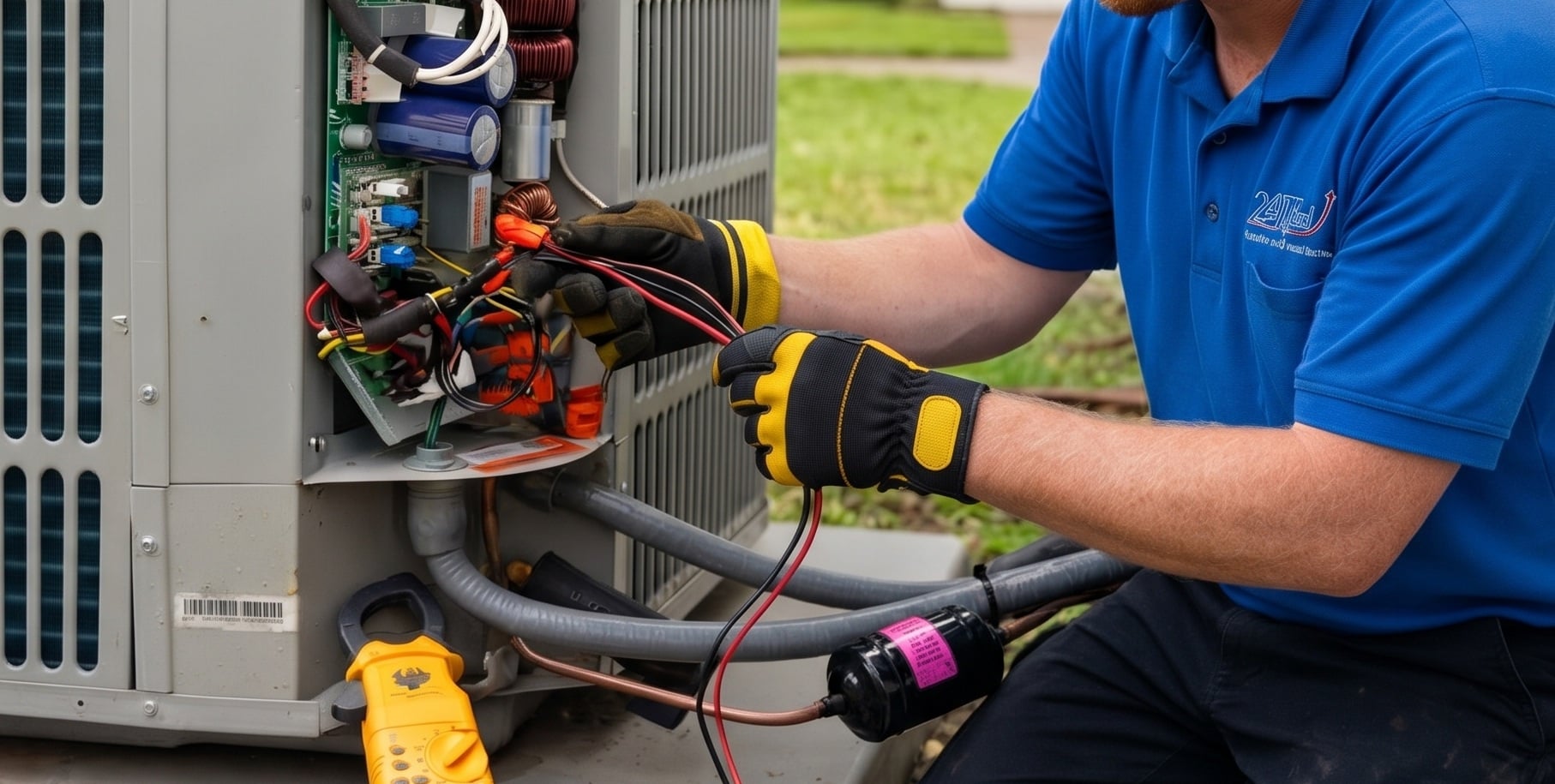
An air conditioner is a mechanical system run by an electrical one, and when it stops cooling a Columbia home in July, the cause is more often electrical than mechanical. The electrical parts are among the least expensive to replace, and also the ones that destroy the mechanical parts if they are left alone. This post walks through the electrical components that fail most often, what each one does, how Columbia’s heat wears on them, and the signs that one is on its way out.
The capacitor
The capacitor is a small metal cylinder inside the outdoor unit that stores an electrical charge and releases it to start the compressor and fan motor. It is the most common electrical failure in an air conditioner, and heat kills it. Capacitors are rated for a temperature range, and a Columbia afternoon in the upper 90s pushes the inside of an outdoor unit past it. The signs are an outdoor unit that hums without the fan turning, a system that takes several tries to start, or a clicking that repeats without the compressor kicking on. A weak capacitor makes its motors draw more current on every start, so a cheap part becomes an expensive one if it waits.
The contactor
The contactor is a relay that sends high-voltage power to the compressor and fan when the thermostat calls for cooling and cuts it when the call ends. Its contacts arc slightly every time they close, and over a long cooling season they pit and burn. A worn contactor may chatter, so the system stutters on and off, or it may stick closed, so the outdoor unit keeps running after the thermostat is satisfied and the house gets colder than the set point while the bill climbs. Ants are drawn to a contactor’s electrical field and are a common cause of failure in this region when they are crushed between the contacts.
Breakers and the disconnect
A breaker that trips once in a heat wave may have simply seen the compressor’s starting surge on a hot day. A breaker that trips repeatedly is telling you the system is drawing more current than it should, and the reasons include a failing compressor, a shorted motor, a bad capacitor forcing hard starts, or damaged wiring. Reset it once. If it trips again, leave it off and call; a breaker that keeps tripping is protecting a fault, and holding it on can start a fire.
Loose and corroded connections
Every wire in an air conditioner terminates at a screw or a push-on connector, and those connections loosen with years of vibration and corrode in Columbia’s humidity. A loose connection creates resistance, resistance creates heat, and heat melts insulation and burns terminals. The signs are intermittent operation, a system that works on some days and not others, or a burning smell near the unit. Tightening and cleaning connections is a standard maintenance item, and it is the reason a system that receives regular service rarely has an electrical fire.
Thermostat and low-voltage wiring
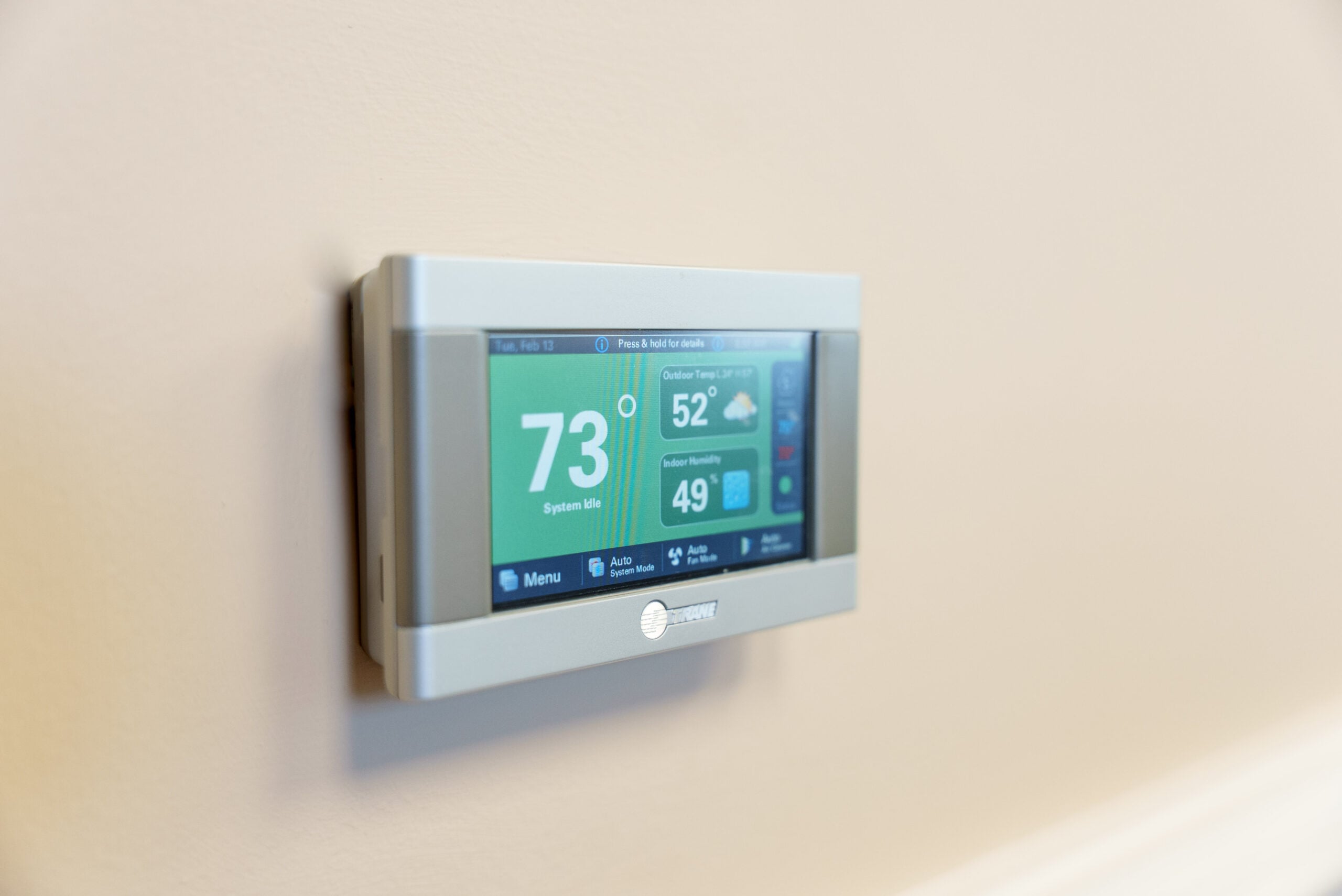
The thermostat runs on low voltage and sends its signals through thin wires to the indoor and outdoor units. A blank display usually means dead batteries or a tripped breaker on the air handler. A system that ignores the thermostat entirely often has a broken low-voltage wire, a loose connection at the terminal strip, or a shorted wire outside where landscaping tools or animals have damaged it. A smart thermostat that reports errors can tell you which of these is happening before the house warms up.
The control board and the transformer
The control board is the small circuit board inside the indoor unit that takes the thermostat’s signal and decides what to turn on and when. The transformer steps household voltage down to the low voltage the board and thermostat use. Both are vulnerable to the voltage swings that come with Columbia’s summer storms and with power returning after an outage, and both can fail after a nearby lightning strike. A system that does nothing at all despite good batteries and closed breakers often has one of these two parts to blame.
The problems outside the system
Not every electrical problem that stops an air conditioner lives inside it. Low voltage from the utility on a hot afternoon, when every house on the street is cooling at once, can stall compressors and trip breakers. Surges when power returns after a storm damage capacitors and boards. And problems in the home’s electrical panel itself, such as a failing breaker, undersized wiring to the unit, or a panel that cannot carry the load, are electrical work rather than air conditioning work. When the fault is in the panel or the house wiring, our technician will tell you so and recommend a licensed electrician; 2nd Wind Heating & Air Conditioning covers the system and its dedicated circuit rather than the home’s electrical service.
What to watch for and when to call
The electrical signs worth acting on are a system that hums without starting, one that takes several tries, a breaker that trips more than once, any burning smell, lights that dim when the outdoor unit starts, or a unit that keeps running after the thermostat is satisfied. Each is inexpensive if it is caught early, and each becomes a compressor if it is not. Regular maintenance catches most of them, because the technician tests the capacitor under load, inspects the contactor, and tightens connections at every visit. For a failure that has already happened, air conditioning repair starts with the electrical readings.
Same-day repair in Columbia
2nd Wind offers same-day emergency service when the air conditioning quits. Same-day emergency service applies to residential properties only. Schedule online, call, or use the 24/7 chat on our website, and the technician will find the failed component, show it to you on video, and give you the price before replacing it. Members of the Cloud 10 Membership receive priority scheduling when the summer heat fills the calendar.