
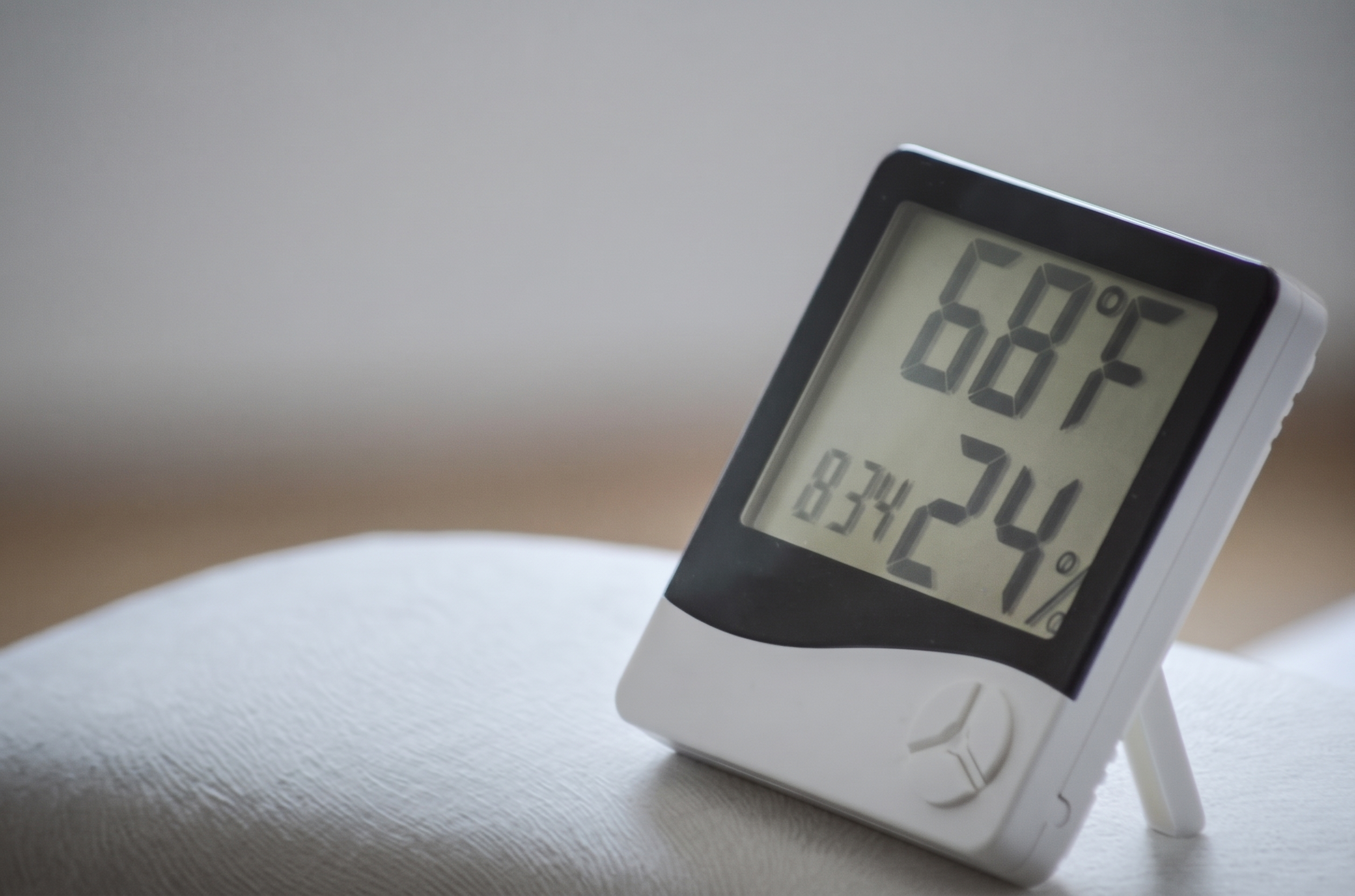
Dry winter air in a Columbia home arrives with the cold snaps. Most of the season is mild, and then a front drops the nights into the 20s for three or four days, the heat runs around the clock, and the indoor humidity falls from a comfortable 40 percent into the low 20s almost overnight. The EPA’s indoor target is 30 to 50 percent, and once a house falls below it the wood floors shrink, static builds, and 70 degrees feels like 66. Two fixes work together: sealing the gaps that let the dry air in, and a humidifier that puts moisture back and holds a set level for the length of the snap.
Columbia’s summers bring too much humidity, and the winter cold snaps bring too little. The swing between the two, often within a few months, is hard on a house.
Why a Cold Snap Dries the House So Fast
Cold air holds very little moisture. Air at 25 degrees carries very little water, and once it slips inside and the heat brings it to 70, that same small amount of water is spread across far warmer air, so the relative humidity drops to desert levels. The heating equipment itself takes nothing out of the air. The leaks do the drying, and the colder and windier the snap, the more air moves through them. A drafty older home in Shandon or Rosewood dries out faster than a tight new build in Chapin for exactly that reason, and both end up dry by the second night.
Heat pumps, the most common heating system in the Midlands, add a comfort wrinkle. Their supply air is warmer than the room but cooler than a furnace’s, and in dry air that cooler airflow feels drier still, which pushes people to turn the thermostat up.
What Dry Air Does to the House
Wood gives up moisture to dry air. Hardwood floors shrink and gaps open between boards, trim pulls away at the seams, doors that stuck in August swing free in January, and furniture joints loosen. Pianos and guitars drift out of tune. Paint and wallpaper crack and peel more readily as the surfaces beneath them dry. Static builds as you cross a carpet, and the shock at the doorknob is the small daily reminder. Dust and dander stay airborne longer instead of settling, which matters in a house that is already sealed.
What Dry Air Does to Comfort
Moisture evaporates from skin faster in dry air, carrying heat with it, so 68 degrees at 20 percent humidity feels noticeably cooler than 68 degrees at 40. Many people respond by raising the thermostat two or three degrees, which costs more and dries the air further. Dry air is also commonly linked to chapped skin, dry eyes, and scratchy throats, and many households sleep better when the air holds some moisture.
Know Your Number
An inexpensive hygrometer, or a smart thermostat with a humidity display, lets you watch the number fall as the front moves through. Check a central room on the second morning of a cold snap. Anything under 30 percent means the house is dry enough to affect the wood and the people in it.
Seal First
Since infiltration is what dries the house, closing the gaps comes first, and it pays twice because the same gaps leak heat. Fresh weatherstripping on the exterior doors, caulk at the window frames, a gasket under the attic hatch, and foam or caulk where pipes and wires pass through the floor above a crawl space cover most of it. Close crawl space vents during the snap and reopen them afterward. Each closed gap keeps the dry air out and the heated, humidified air in.
Add Moisture Back
A whole-home humidifier attaches to the duct system at the air handler and moistens the air on its way to every register, which is the difference between humidifying the house and humidifying the one room a portable unit sits in. Its humidistat holds whatever level you set and eases off automatically on the coldest nights so the windows stay clear. Bypass and fan-powered models use a water panel that the warm air passes over. Steam models make their own moisture, which suits the Midlands’ many heat pump homes, since a heat pump’s cooler supply air gives a bypass unit less to work with. All of them connect to a water line and a drain, which is why installation is part of the service.
The only caution is setting the level too high for the weather. Condensation on the inside of windows in the morning means the humidistat should come down a few points until the snap passes.
Getting Your Home Through the Snap
2nd Wind has served Columbia and the surrounding Midlands since 1985, and our trained experts walk the house for leaks and check the equipment before they recommend a humidifier. You hear the options explained so you can make an informed decision, and the installation is done right the first time by the same team that services your heating system. Schedule an evaluation online or reach our team through 24/7 website chat, and we will help your home stay comfortable through the next front.
Frequently Asked Questions
Does a humidifier make sense when Columbia winters are so mild?
It does for homes that feel the cold snaps: hardwood floors that gap each January, instruments that drift, or a household that wakes up with dry throats. The unit runs during the few weeks that need it and sits idle the rest of the year. It costs little to operate because it only adds moisture when the humidistat calls for it.
Can I just run a pot of water on the stove or a portable humidifier?
A pot of water adds a little moisture to the kitchen and nowhere else, and a portable humidifier treats one room while needing daily refills. Neither reaches a whole house that is losing moisture through every gap. A whole-home unit adds moisture to all of the air passing through the ductwork and refills itself.
Will a humidifier cause mold or window condensation?
Only if it is set higher than the outdoor temperature allows, which shows up as fog or water on the inside of windows in the morning. A humidistat set correctly, and lowered a few points during the coldest nights, keeps moisture where it belongs. Annual service replaces the water panel before anything grows on it.
Why does a heat pump feel like it dries the air out more than a furnace?
It does not remove any more moisture, but its supply air is cooler than a furnace’s, and cooler moving air feels drier on skin. The humidity reading is the same with either system. A steam humidifier, which does not rely on hot supply air to evaporate water, pairs best with a heat pump.
How often does a whole-home humidifier need service?
Once a year, usually at the fall heating tune-up. The water panel is replaced, the water line and drain are checked, and the humidistat is tested. In homes on well water with heavy minerals, the panel may need changing midseason, which a technician can tell you after the first winter.