
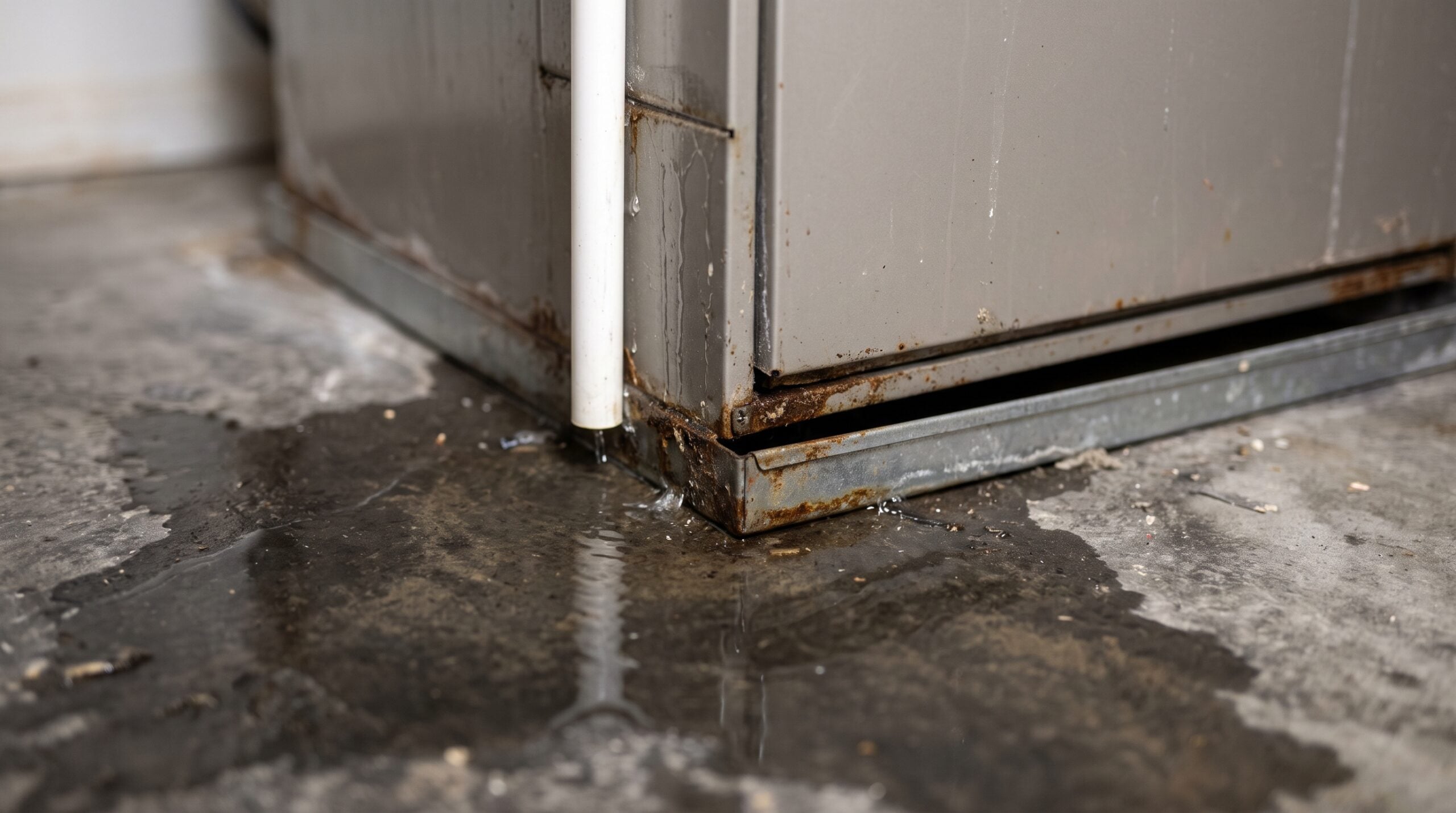
An air conditioner that leaks water has stopped draining the moisture it pulls out of your air, and where the water appears tells you most of what you need to know. Water on the floor beside an indoor unit in a closet or garage usually means a clogged condensate drain line or a cracked pan. A stain spreading across a ceiling means an attic air handler’s pan has overflowed or its secondary drain has failed. Water dripping from an exterior wall where a small pipe exits means the primary drain is blocked and the emergency drain is doing its job. Each pattern has a different urgency and a different fix.
In Columbia’s humid summers, a central system can pull well over ten gallons of water a day out of the house. That volume is normal. It only becomes a problem when the path it takes outside is blocked, and the first sign is usually the water itself.
Water on the Floor by the Indoor Unit
The condensate drain line is a small PVC pipe that stays wet from May through October, which makes it a home for algae and slime. When it clogs, water backs up into the drain pan and over the edge. A float switch, if your system has one, shuts the unit off when the pan fills, so an air conditioner that quit on a hot day with water in the pan has protected itself. Clearing and treating the line restores drainage. A cracked or rusted pan produces the same puddle without the backed-up line, and it is more common on systems past ten years.
The other floor-level cause is a coil that froze and thawed. A dirty filter or a low refrigerant charge lets the indoor coil ice over, and when the system cycles off, the ice melts faster than the pan can drain. If you find ice on the coil or the refrigerant line, turn the system off, replace the filter, and let it thaw before restarting.
A Stain on the Ceiling
Attic air handlers are common in Midlands homes built on slabs, and when one overflows, the water lands on the ceiling below. Code requires a secondary drain pan under an attic unit with its own drain line or a float switch, and a stain means the primary drain clogged and the secondary protection failed or was never installed. Turn the system off as soon as you see the stain. Drywall and insulation that stay wet for a day or two become a mold and repair problem that costs far more than the drain line that started it.
Water Dripping Outside From a Small Pipe
Many attic systems route the secondary drain to a pipe that exits an exterior wall above a window or door, placed where you will notice it. Water dripping from that pipe is the system telling you the primary drain is blocked. The ceiling is still dry only because the backup is working, and it stops working the day the secondary line clogs too. Treat the drip as a service call, not a quirk.
The Causes Behind the Water
- A drain line clogged with algae and dust, the most common cause and the easiest to prevent.
- A drain line that has sagged, lost its downward slope, or separated at a joint, often after other work in the attic.
- A cracked or rusted drain pan on an older air handler.
- A frozen coil from a dirty filter, low airflow, or a refrigerant leak.
- An oversized system that short-cycles and leaves the coil dripping in bursts rather than draining steadily.
Preventing the Next One
Pour a cup of distilled vinegar into the drain line’s access tee every month or two during cooling season to slow algae growth. Keep the filter fresh, since a frozen coil is the second most common cause of a flood. And have the line flushed, the pan inspected, and the float switch tested at the start of each season. Those steps are part of the spring visit for members of our Cloud 10 Membership, which also includes coil cleaning at every visit to keep the coil from freezing in the first place.
Getting It Draining Again
2nd Wind has served Columbia and the surrounding Midlands since 1985, and our trained experts trace a leak to its cause rather than clearing the puddle and leaving. During an AC repair visit, your technician inspects the drain, the pan, the coil, and the refrigerant charge, records video of what they find, and walks you through the options. Same-day service for residential customers is arranged by phone, and our website chat is open 24/7. We will get the water going where it belongs.
Frequently Asked Questions
Why does my AC drain line clog every summer?
A line that clogs yearly usually has a routing problem: a sag that holds standing water, too little slope, or a long run through a hot attic where algae grows fast. Monthly vinegar treatments help, but correcting the slope or adding a cleanout tee solves it for good. Your technician can see the problem during a drain service.
Is the water from my air conditioner safe to drain into the yard?
Yes. Condensate is distilled water pulled from indoor air, and most systems drain it onto the ground or into a gravel bed outside. It should not drain next to the foundation where it can pool against the house, and it should never be tied into a sewer line without a trap and approval from the local code office.
What does a condensate pump do and why does mine hum?
Basement and closet units that sit below the drain’s exit point use a small pump to lift the water out. A pump that hums without emptying its reservoir has a stuck float or a clogged check valve, and the reservoir will overflow if it is not cleared. Pumps are inexpensive and quick to replace when they fail.
Can a leaking AC raise my power bill?
The leak itself does not, but the causes behind it do. A frozen coil and a dirty filter both force the system to run longer for less cooling, and an oversized system that drips in bursts is also short-cycling, which wastes energy. Fixing the drainage problem usually fixes the efficiency problem with it.
Should I replace the drain pan or the whole air handler?
A cracked primary pan is often part of the coil assembly, and on a system under ten years old replacing the pan or coil is reasonable. On an older unit with a rusted pan, the rust usually means the cabinet and coil are aging too, and a replacement quote alongside the repair quote lets you compare the two with the numbers in front of you.