
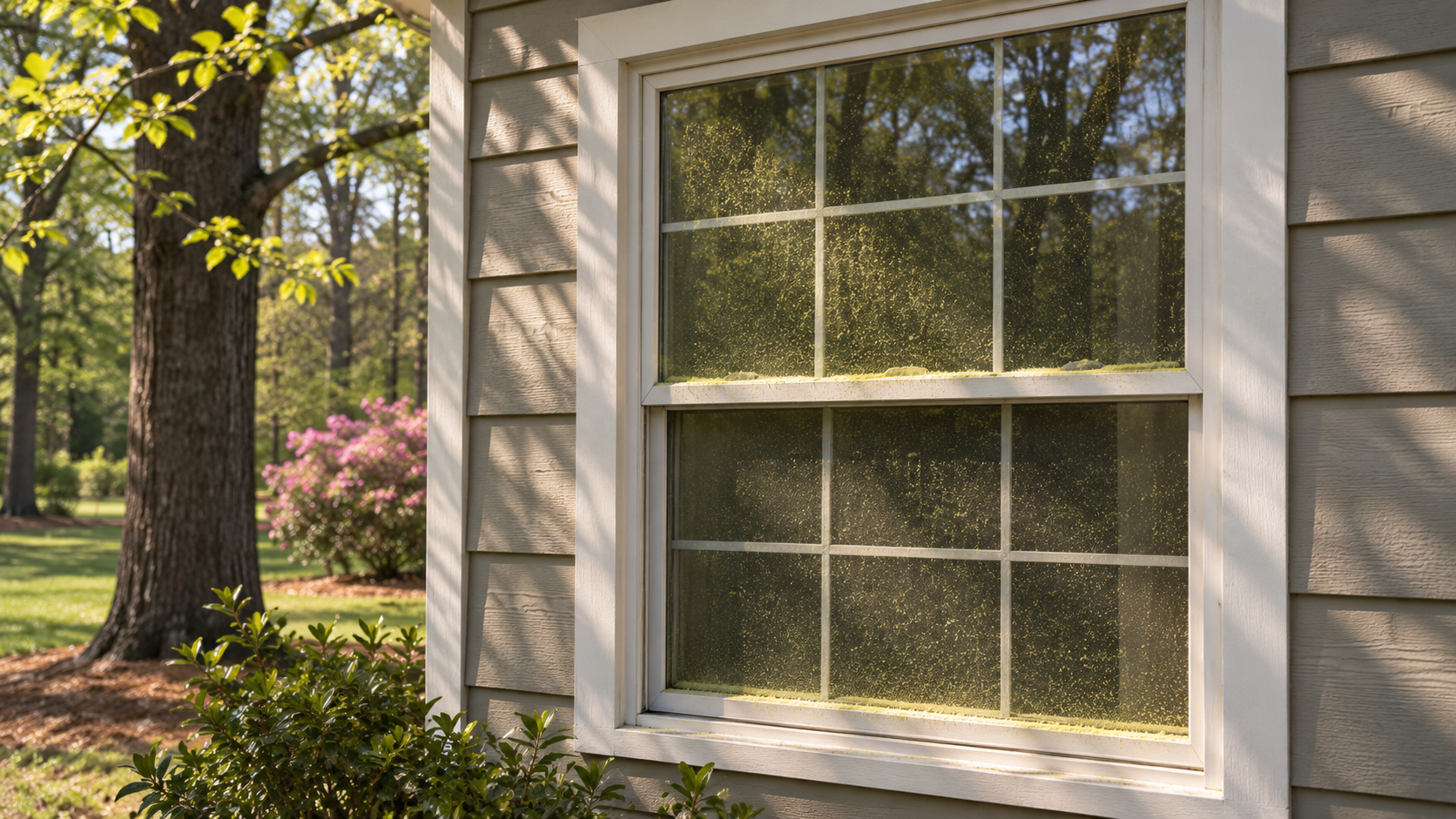
Spring pollen in Columbia does two things to your home at once. It gets into the air you breathe, riding in on shoes, pets, and open doors, and it coats the outdoor unit of your air conditioner during the exact weeks the system comes back to life for the season. Getting ready means a fresh filter before the yellow arrives, closed windows on the heaviest days, a rinse or a cleaning for the outdoor coil before the first warm week, and a filtration upgrade if someone in the house spends April sneezing.
Pine pollen starts in late March, peaks in early April, and coats cars, porches, and pollen-colored puddles for about three weeks. Oak and the other hardwoods release their finer, more allergenic pollen a week or two behind the pine. By the time it clears, most Midlands homes have run the air conditioner for the first time, and the system has pulled a season’s worth of pollen into itself.
What Pollen Does to the Outdoor Unit
The outdoor coil sheds the heat your system pulls out of the house, and it does that through thousands of thin aluminum fins. Pollen, cottonwood fluff, and the grass clippings of the first mowing stick to those fins in a mat that holds heat in. A coated coil makes the compressor run longer and hotter for the same cooling, and the first 90-degree week in May is when that shows up as a system that cannot catch up. Shut off power at the disconnect and rinse the fins gently with a garden hose once the heaviest pollen has passed, spraying from the inside out if the top panel allows it. Never use a pressure washer, which flattens the fins. The deeper cleaning that lifts what a hose cannot is part of the spring visit for members of our Cloud 10 Membership, which includes coil cleaning at every visit.
What Pollen Does Indoors
Pine pollen grains are large, which is why they settle on every surface and why a standard pleated filter catches them easily. The hardwood pollens are much smaller, stay airborne longer, and pass through a low-grade filter, which is why the sneezing continues after the yellow dust is gone. Indoors, pollen combines with the dust and pet dander that built up over winter, and the first cooling cycles of the year blow all of it out of the ducts at once.
A filter rated MERV 8 catches most pollen. MERV 11 catches the finer hardwood grains, and it suits most systems without restricting airflow. Change the filter when the pollen peaks and again when the season ends, since a filter that went in at Thanksgiving is carrying a winter of dust before the pollen adds to it.
The First Cooling Cycle of the Year
The switch from heating to cooling stirs up whatever settled in the ductwork over the colder months, and in Columbia that switch lands in the middle of pollen season. An AC tune-up before that first warm week cleans the indoor coil, where pollen and dust combine with condensation into a film that cuts efficiency, and confirms the condensate drain is clear before the humid months arrive. It is also when a technician can tell you whether the ducts need attention or whether the filter is doing its job.
When Filtration Is Not Enough
For a household where spring allergies are a yearly event, two upgrades go beyond the filter. A media cabinet at the air handler holds a thicker filter with far more surface area, which captures more without choking the blower and lasts six months to a year. An in-duct air scrubber works on the particles, odors, and contaminants a filter alone does not address, and because it runs whenever the blower runs, it is working through most of the day in pollen season.
Habits for the Yellow Weeks
- Keep windows closed on high-pollen days and let the HVAC system do the filtering.
- Leave shoes at the door and change clothes after yard work.
- Wipe down or bathe pets more often, since fur carries pollen straight to the couch.
- Vacuum with a HEPA-filtered vacuum and damp-mop hard floors rather than sweeping.
- Wait to rinse the outdoor unit until the heaviest pollen has passed, then do it before the first hot week.
- Replace the filter at the peak and again at the end of the season.
Getting Ahead of the Season
2nd Wind has served Columbia and the surrounding Midlands since 1985, and our trained experts assess your indoor air quality and your cooling system together, since spring is when the two problems overlap. You hear the options explained so you can make an informed decision, and the work is done right the first time. Schedule a spring tune-up online or reach our team through 24/7 website chat, and we will help you get ahead of the yellow.
Frequently Asked Questions
When does pollen season end in Columbia?
The heavy pine pollen usually clears by mid-April, and the hardwood pollens taper off through the end of the month. Grass pollen follows from May into June at lower levels. Most households notice the worst of it over about three weeks from late March to mid-April.
Can pollen damage my outdoor AC unit?
Pollen itself does not damage the unit, but a coil coated in pollen cannot shed heat, which makes the compressor run hotter and longer. Over several seasons, that extra strain shortens the compressor’s life. A gentle rinse after pollen season and a professional cleaning at the spring tune-up prevent the buildup.
Should I run the AC during pollen season even if it is not hot?
Running the system on fan or on a mild cooling setting during pollen season moves the indoor air through the filter, which removes pollen that came in on clothing and pets. It uses little energy on a mild April day. Keep the windows closed while it runs, or the filter is working against an open door.
Does an air scrubber remove pollen?
An in-duct air scrubber works on particles, odors, and biological contaminants throughout the home and complements the filter rather than replacing it. The filter catches the bulk of the pollen, and the scrubber addresses what remains in the air and on surfaces. Together they cover more than either one alone.
Why do my allergies feel worse inside the house in April?
Indoors, pollen that came in on shoes and pets settles into carpet and upholstery and gets stirred up by foot traffic and the blower, and a sealed house gives it no way out except the filter. A low-grade filter, dusty ducts, or a leaky return pulling in attic air keeps the cycle going. Upgrading the filter and checking the ducts usually breaks it.