
The water-saving upgrades that matter most in a Columbia home are different in each room. In the bathroom, it is a modern toilet and a WaterSense showerhead. In the kitchen, it is a faucet aerator and a dishwasher used wisely. In the laundry room, it is braided hoses and cold-water washing. In the yard, it is irrigation timing and a working backflow preventer. And throughout the house, it is finding the leak that wastes more than every fixture combined. Summer pushes water use higher in every one of those rooms, so the changes show up fastest on the bills that arrive in July and August.
Here is the house, room by room, with the upgrade that pays and the reason it works.
The Bathroom
Toilets use more water than any other fixture in most homes, and toilets installed before 1994 can use as much as six gallons per flush, according to the EPA. The current federal standard is 1.6 gallons, and WaterSense toilets use 1.28 or less, which makes a toilet replacement the largest single water savings available in an older house with two or three original fixtures. Today’s models flush effectively at the lower volume, which the first low-flow toilets of the 1990s did not always manage. A toilet that runs between flushes or needs repeated flapper replacements is a candidate, and our toilet repair and replacement service handles both.
Showerheads come next. A standard showerhead uses 2.5 gallons per minute, and a WaterSense model uses 2.0 or less while meeting tests for spray force and coverage. Because most of that water is hot, the swap lowers the water heating bill too. A WaterSense bathroom faucet aerator brings the flow from 2.2 gallons per minute to 1.5 with no change behind the wall.
The Kitchen
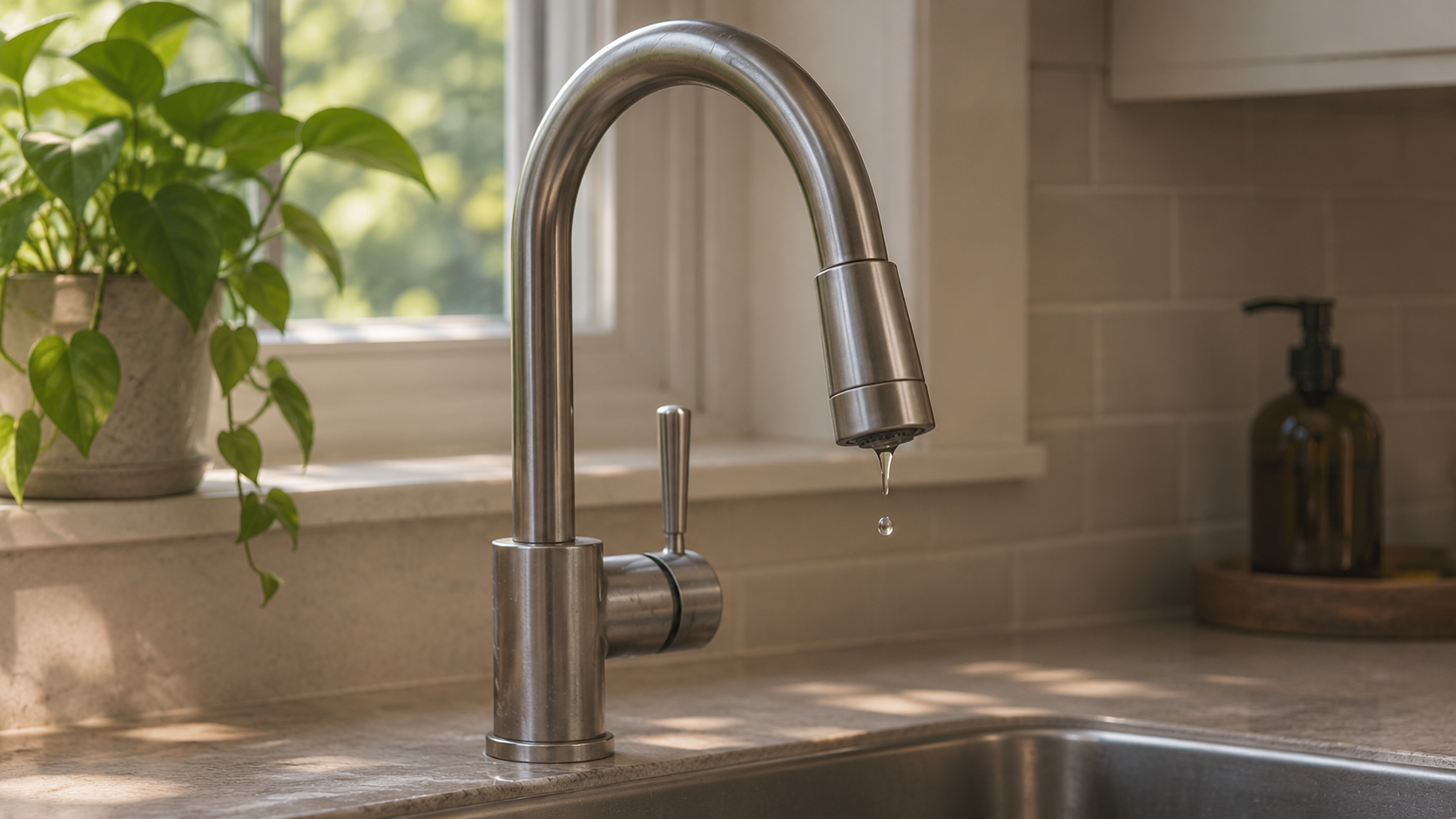
The kitchen faucet runs many times a day, and a WaterSense aerator cuts its flow without affecting how it fills a pot. A dripping faucet is the other kitchen upgrade, because a drip at one per second wastes thousands of gallons a year, and a faucet repair stops it for the cost of a cartridge. Run the dishwasher only when full and skip the pre-rinse, since modern dishwashers use less water than rinsing by hand. If the kitchen sits far from the water heater and you run the tap waiting for hot water, a recirculation setup keeps hot water in the line so it arrives in seconds, which pairs well with a water heater replacement.
The Laundry Room
Replace rubber washing machine hoses with braided stainless steel, which resists the bursting that floods laundry rooms while the house is empty. Wash in cold water, which handles all but heavily soiled loads with modern detergents and keeps the water heater idle. Run full loads. A high-efficiency washer, when the time comes to replace the old one, uses a fraction of the water of a top-loading agitator model.
The Water Heater
Set it to 120 degrees, the temperature the U.S. Department of Energy recommends, which lowers energy use and slows mineral buildup. A tankless water heater does not save water on its own, but paired with a recirculation setup it ends the habit of running the tap while a cold line clears. For homes on wells or on supplies that carry sediment, a water filtration system keeps aerators, showerheads, and the water heater from clogging with scale, and a water softener does the same where hardness is the issue. Columbia’s municipal supplies vary, and homes on wells around Lake Murray and in Kershaw and Newberry counties see the most scale.
The Yard
Irrigation is the largest outdoor use, and the timing matters more than the amount. Water before sunrise so less evaporates, set the controller to skip rainy days, and fix cracked heads and lines, which leak invisibly in sandy soil. If the home has an irrigation system, it has a backflow preventer, and most utilities require it to be tested on a schedule to keep irrigation water out of the drinking supply. Repair dripping hose bibs, since a spigot left dripping all summer wastes far more than it seems.
Leaks
A single leak can waste more than every fixture upgrade saves. The EPA puts the average household’s leaks at nearly 10,000 gallons a year. Test every toilet with a few drops of food coloring in the tank, watch the water meter with everything off, and consider a whole-home leak detection system that monitors flow at the main line and alerts your phone when water runs at a time or rate that does not fit. For a leak already underway, leak detection locates it so the repair stays small.
Choosing What to Do First
An older home with original toilets gains the most from replacing them. A newer home with WaterSense fixtures already installed gains the most from leak detection and irrigation timing. 2nd Wind has served Columbia and the surrounding Midlands since 1985, and our trained experts look at your fixtures, your pressure, and your water quality before recommending anything, with the options explained so you can decide what fits your household. Schedule a plumbing visit online or reach our team through 24/7 website chat, and we will help you use less water without giving up comfort.
Frequently Asked Questions
Do WaterSense showerheads feel weak?
Not the current generation. WaterSense certification requires fixtures to pass tests for spray force and coverage at the lower flow, and most people cannot tell the difference. Older low-flow heads from the 1990s earned the weak reputation before those performance tests existed.
Will a new toilet work with my old plumbing?
Yes. Modern 1.28-gallon toilets are designed to clear waste through standard drain lines, and they connect to the same supply and flange as the old toilet. Homes with very long or shallow-sloped drain runs occasionally benefit from a model with a higher flush rating, which a plumber can recommend after looking at the line.
How much water does a dripping faucet waste?
The EPA estimates that a faucet dripping once per second wastes more than 3,000 gallons a year, enough for roughly 180 showers. Most drips come from a worn cartridge or washer, and the repair costs far less than the water. A drip on the hot side also wastes the energy used to heat it.
Is a tankless water heater a water-saving upgrade?
Not by itself. A tankless unit saves energy by heating water only on demand, but the cold water in the line still has to clear before hot water arrives. Paired with a recirculation pump, it ends that wait and the wasted water that goes with it, which is where the water savings come from.
Should I turn off the irrigation system during a Columbia drought?
Follow your utility’s restrictions, which during dry years have limited watering days and hours across the Midlands. Established lawns survive weeks of restriction with less water than most homeowners expect, and pre-dawn watering on the allowed days delivers more to the roots than a longer midday run.