
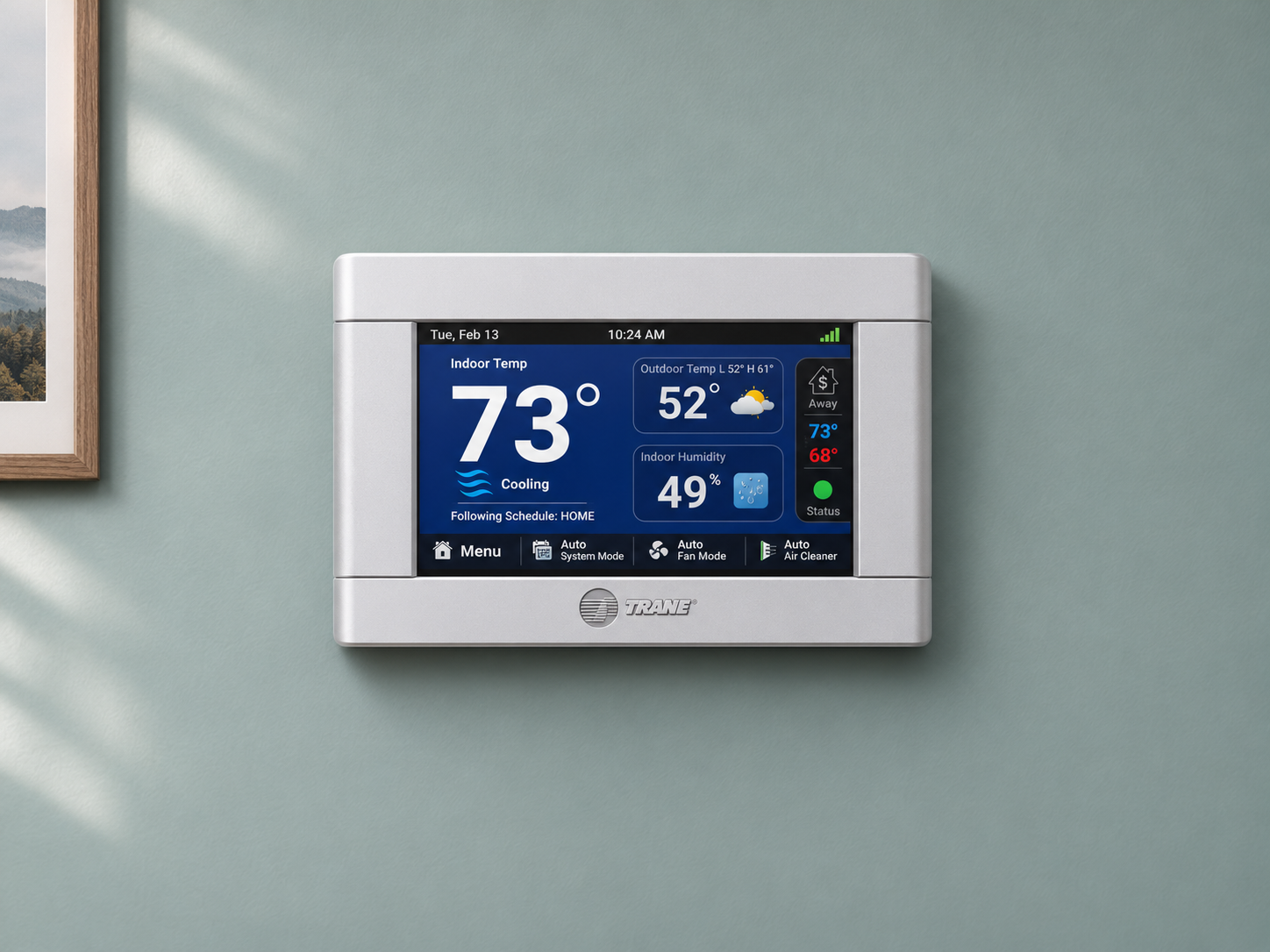
A smart thermostat is worth the upgrade in Columbia because of what it does across a long cooling season while nobody is thinking about it. ENERGY STAR estimates that a certified smart thermostat saves about 8 percent on heating and cooling bills, and in a climate where the air conditioner runs from May into October, that percentage applies to the largest part of the power bill. The payoff depends on letting it run a schedule instead of overriding it, on confirming the system is compatible, and on a setup that matches the equipment. Here is what one does across a single July day, which is the clearest way to see where the savings come from.
7 a.m.: The House Empties
The schedule raises the setting from 74 to 80 as the last person leaves, or geofencing does it when the last phone leaves the neighborhood. The U.S. Department of Energy reports that a setback of 7 to 10 degrees for eight hours a day saves as much as 10 percent a year, and this is where the day’s share of that starts. A manual thermostat delivers the same savings only if someone remembers to change it, twice, every day.
11 a.m.: The Attic Heats Up
The thermostat holds 80 while the attic climbs past 120 degrees. Holding a higher setting means the house gains less heat from outside than it would at 74, because the gap between inside and outside is smaller, which is why the recovery later costs less than the hours of cooling skipped. The thermostat logs the runtime, and if the system is running more than it did in June to hold the same number, the app shows it, which is often the first sign of a refrigerant leak or a dirty coil.
3 p.m.: The Peak
Outdoor temperature peaks in the low 90s. A smart thermostat with humidity readout shows the house at 80 degrees and 52 percent humidity, which is the number that matters more than the temperature for how the house will feel at five. If the humidity creeps up past 55 while the house is empty, the system is short-cycling or the ducts are pulling in humid air, and that is information a manual thermostat never gives you.
4:30 p.m.: The Cooldown Begins
Geofencing sees the first phone heading home, or the schedule starts the recovery, and the system begins bringing the house back down from 80 to 74 so it is comfortable when the door opens. Starting early and recovering gradually is what makes the setback invisible. Some models learn how long the recovery takes in your house and adjust the start time to the weather.
10 p.m.: Overnight
The schedule raises the setting a couple of degrees for sleeping, and the fan stays on Auto so moisture on the coil drains instead of blowing back into the house between cycles. A smart thermostat can also run the fan periodically to even out the temperature between a warm upstairs and a cool downstairs, which many Columbia two-story homes need in summer.
What It Does Beyond the Day
Remote control from your phone turns a forgotten setting on vacation into a thirty-second fix. Filter reminders arrive based on measured runtime rather than a calendar. Runtime alerts flag a system that is working harder than it used to. Monthly reports show where the cooling dollars went. And on a heat pump, the most common system in the Midlands, a smart thermostat built for heat pumps manages the electric backup strips so they run only on the few winter nights that need them, while a poorly configured one calls for them every time the setting moves.
Compatibility Checks Before You Buy
Most smart thermostats need a common wire, often called a C-wire, for steady power, and many older installations do not have one. The thermostat also has to match the equipment: single-stage or multi-stage, heat pump or furnace, conventional or dual fuel. A gas pack, a dual fuel system, and a variable-speed system each have their own requirements, and some variable-speed equipment performs best with the manufacturer’s own communicating thermostat. Homes with line-voltage baseboard heat or older millivolt systems need a different approach entirely.
Getting the Most Out of It
- Set your own schedule rather than leaving factory defaults, since your household’s routine is not the manufacturer’s guess.
- Hold steady temperatures through long stretches, such as workdays and overnight, rather than making frequent small changes.
- Limit manual overrides, since each one interrupts the schedule that produces the savings.
- Turn on filter reminders and runtime alerts, and act on them.
- Use the Hold or Vacation setting when you will be away more than two days.
Why Professional Setup Pays
Wiring a smart thermostat is low-voltage work, but the configuration is where the value lives. Your technician confirms the C-wire, identifies the equipment type and number of stages, sets the heat pump balance point and backup heat lockout, and runs the system through a full heating and cooling cycle before leaving. On a heat pump, that setup can be the difference between the savings the manufacturer advertises and a winter bill that goes up. 2nd Wind has served Columbia and the surrounding Midlands since 1985, and our trained experts install and program smart thermostats as part of doing it right the first time. Schedule an installation online or reach our team through 24/7 website chat, and we will set it up to fit your system and your household.
Frequently Asked Questions
Does a smart thermostat work with a gas pack?
Yes. A gas pack is a furnace and air conditioner in one outdoor cabinet, and it uses the same low-voltage thermostat wiring as a split system. The thermostat needs to be set up for a conventional gas heat and electric cooling system rather than a heat pump. Your technician confirms the stages and wiring at installation.
Can a smart thermostat control my mini-split?
Most mini-splits use their own remote or wall controller rather than standard thermostat wiring, so a conventional smart thermostat cannot control one directly. Many manufacturers offer a Wi-Fi adapter for their mini-split line that adds app control and scheduling. Ask about the adapter when the mini-split is installed.
Do smart thermostats need batteries?
Most run on the C-wire and use batteries only as a backup for the clock and settings, and some have a built-in rechargeable cell. Models installed without a C-wire may drain their batteries or the control board, which is the most common reason a new thermostat behaves erratically. Confirming the C-wire before buying avoids it.
Can I run the fan alone to circulate air without cooling?
Yes. Smart thermostats include a fan-only mode and often a circulate setting that runs the fan for a set number of minutes each hour, which evens out a warm upstairs and a cool downstairs. Running the fan continuously in summer blows moisture off the coil back into the house, so the periodic setting is the better choice in the Midlands.
What happens to my settings if I change internet providers?
The thermostat keeps running its stored schedule from the wall unit, and you lose app access until it is connected to the new network through the thermostat’s settings menu or the app. Learned schedules and account settings stored in the cloud return once it reconnects. Nothing needs reprogramming.