
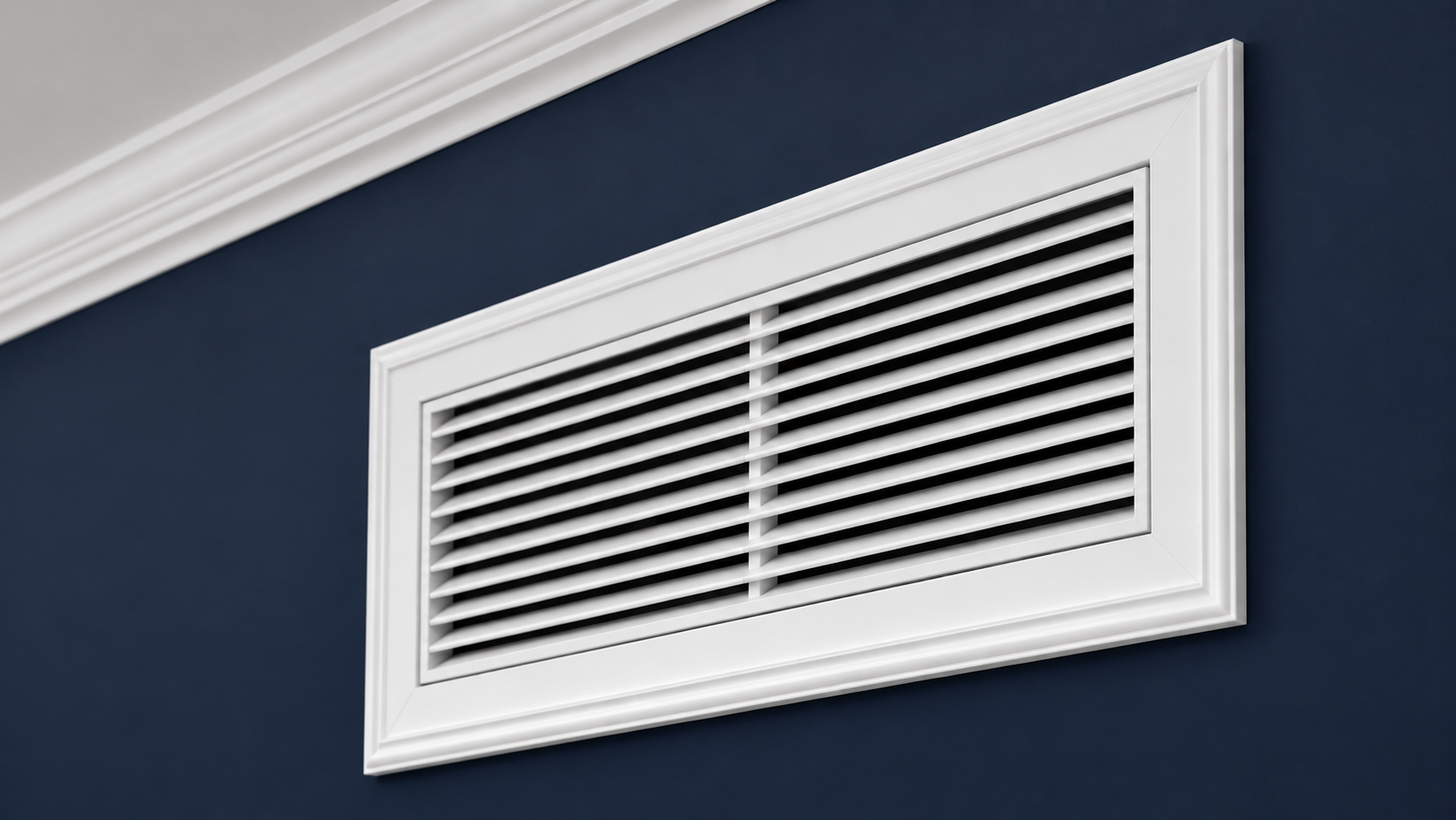
Return air ducts are the half of your duct system that pulls air out of the rooms and carries it back to the air handler, where it passes through the filter and over the coil before heading out again through the supply ducts. They matter because a forced-air system is a loop, and the blower can only push out as much air as the returns let it pull in. When the return side is undersized, blocked, or leaking, the system moves less air, the rooms farthest from the equipment run warm, the coil can freeze, and in a Columbia attic a leaky return pulls in air that can top 130 degrees in July and sends it straight across the coil you are paying to keep cold.
Supply registers get noticed because air comes out of them. Return grilles, the larger louvered openings in a hallway ceiling or wall, get furniture pushed against them.
How the Loop Works
The blower does two jobs at once. It pushes conditioned air out through the supply ducts, and it pulls room air back through the returns to replace it. Returning air crosses the filter first, which is why a dirty filter affects the whole house and why a return grille is often the filter’s home. In cooling mode, the coil also pulls humidity out of that returning air, so the return side has a direct hand in how dry and comfortable a Midlands house feels in August.
Why the Two Sides Have to Balance
When a room gets more supply air than its return can carry away, it builds slight positive pressure and pushes conditioned air out through gaps around windows and outlets. When the return pulls harder than the supply delivers, the room goes negative and pulls outside air in through the same gaps, along with crawl space air from below the floor. In a home with a gas water heater or furnace in a closet, negative pressure can pull combustion gases back into the house, which turns a comfort problem into a safety one. Balance is why a well-designed home has a return path from every room, whether that is a dedicated return grille, a transfer grille over the door, or a jumper duct in the ceiling.
The Central Return Problem
Many Columbia homes built from the 1960s through the 1980s rely on one or two central returns in a hallway. That works as long as air can get from each room back to the hallway, and a bedroom door closed at night cuts that path. The room goes positive, the supply air slows, and by morning the room is stuffy. Builders solved this with undercut doors, transfer grilles, and jumper ducts, and many homes have none of those. Adding one is a small job that fixes a complaint homeowners have lived with for years.
Panned Returns and Attic Returns
Some older homes use floor joist bays or wall cavities closed off with sheet metal as return ducts. Those panned returns were rarely sealed, and they pull air from the crawl space through every gap, bringing moisture, dust, and musty air into the system. Newer homes with attic air handlers often run the return trunk through the attic, where a loose joint pulls in the hottest air on the property. Both are common findings in a duct inspection, and sealing them changes how the whole house feels.
Signs the Return Side Is Restricted
- Rooms that run warmer or cooler than the rest of the house regardless of the thermostat setting.
- Doors that swing shut, pull open, or whistle when the blower runs.
- Weak airflow at the supply registers with a clean filter.
- A coil that freezes in summer, because low airflow lets it get too cold.
- A furnace or gas pack that shuts down on its high-limit switch in winter.
- More dust than usual, especially near the return grilles.
- A musty smell when the system starts.
Common Causes and Fixes
The simplest cause is a couch or bookcase against the return grille, and the fix is moving it. A clogged filter chokes the whole return side. Beyond those, returns can be undersized for the equipment, which often happens after a larger system replaces an older one without any change to the ductwork. Flex duct in a crawl space gets crushed or kinked. A return trunk pulls apart at a joint. A technician measures static pressure, which is the resistance the blower works against, and that number tells whether the return side needs sealing, enlarging, or an added return. A duct inspection covers all of it.
Keeping Returns Working
Keep furniture a foot away from every return grille, change the filter on schedule, and leave interior doors open when you can. If the symptoms above keep showing up, have the ductwork measured rather than guessing, because the fix for an undersized return is different from the fix for a leaking one. Few changes improve comfort, efficiency, and air quality in one step the way sealing and resizing the returns does.
Getting Your System Breathing
2nd Wind has served Columbia and the surrounding Midlands since 1985, and our trained experts evaluate the whole duct system, not just the parts you can see. Your technician records video of what they find in the attic or crawl space and reviews it with you, so you can see the condition of your ductwork before deciding on a repair. Schedule a duct evaluation online or reach our team through 24/7 website chat, and we will help your system move air the way it was designed to.
Frequently Asked Questions
How many return grilles should a house have?
Ideally one in every room that has a supply register, or a transfer path from each room to a central return. Many homes get by with one central return per floor, and the fix for a stuffy bedroom is a transfer grille or jumper duct rather than a full new return. A technician can tell you whether the total return area matches the equipment.
Can a return duct be too big?
Rarely. Returns are far more often undersized than oversized, because builders size them for the original equipment and later replacements grow. An oversized return simply moves air at lower velocity and lower noise, which is a benefit. The concern is a return that is undersized for the blower.
Why is the air coming out of my return grille instead of going in?
It is not. Air always flows into a return, and what feels like air coming out is usually air moving across your hand toward the grille. If a grille truly blows air out, it is a supply register that was installed with a return-style grille, which happens in some older homes. A technician can confirm which ducts connect where.
Should the filter go in the return grille or at the air handler?
One location is enough, and the air handler slot is the standard spot. A grille filter works in homes designed for it, but a filter at both locations restricts airflow and strains the blower. If your home has several return grilles, filter at the equipment instead of at each grille.
What is static pressure and why does the technician measure it?
Static pressure is the resistance the blower pushes against to move air through the ducts, and it is measured with a gauge at the air handler. High static pressure means the ducts, the filter, or the coil are restricting airflow, and the reading tells the technician whether the problem is on the supply side or the return side. It is the single most useful number in a duct evaluation.