
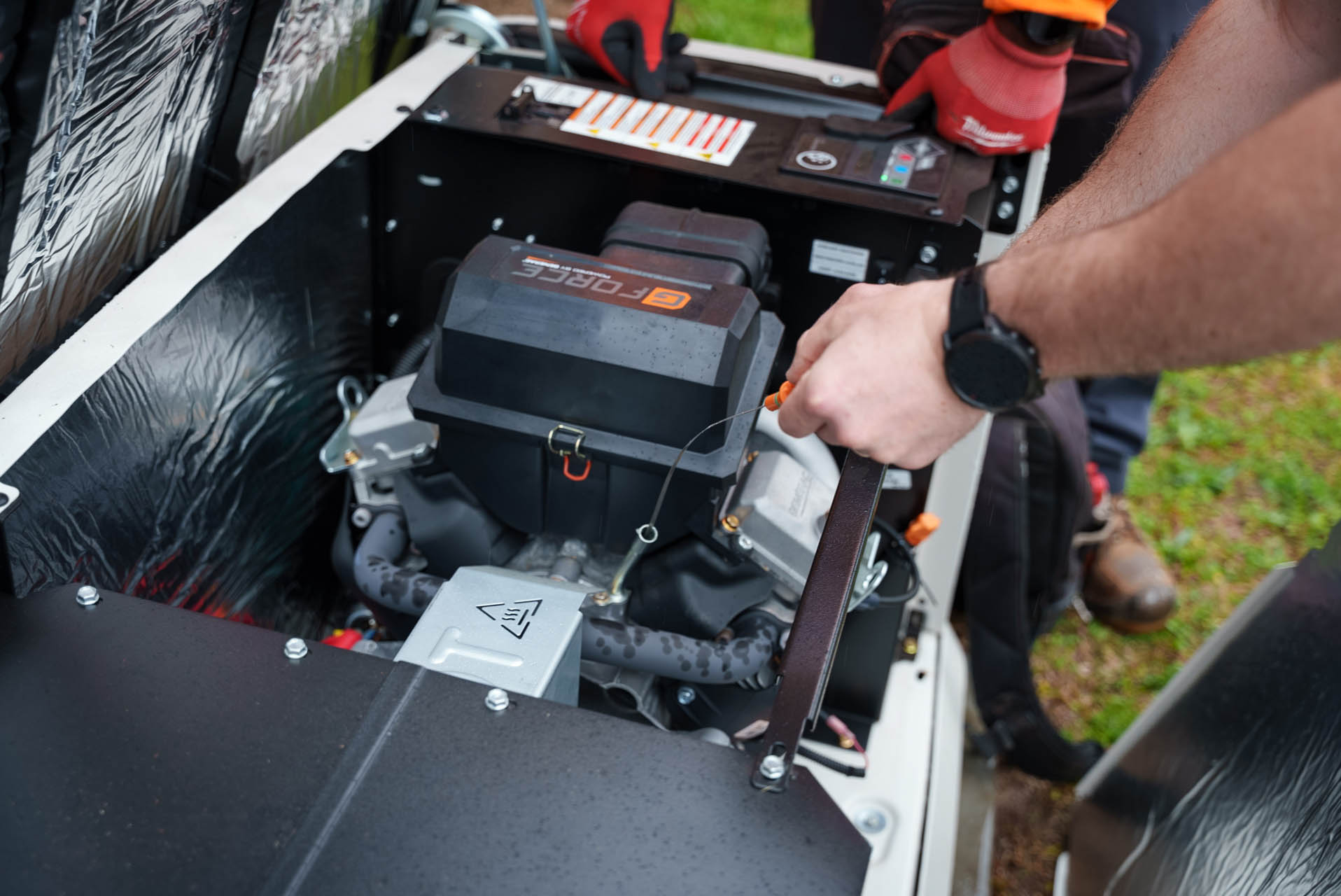
A generator problem stays invisible until the exact moment it matters. A furnace with a weak part fails on a cold night, but at least it fails while you are using it and notice. A generator with a weak part fails when the utility power goes out, which is the one moment you cannot do without it. Here are six generator problems that start small and grow while nobody is watching, and what each one looks like by the time a storm reveals it.
1. A weakening battery
The battery in a standby generator does two jobs. It starts the engine and keeps the controller powered so the unit knows when to exercise and what faults it has logged. As the battery weakens, the engine cranks a little slower during the weekly self-test, and most people never hear the difference. Then the controller starts resetting when voltage dips, losing its schedule and skipping exercise cycles, so the engine sits longer between runs and gets harder to start. The end state is a generator that cranks once and quits on the night of an ice storm. Generator batteries last two to four years, and Columbia’s summer heat pushes them toward the short end of that range. A battery replaced on schedule is an inexpensive part of annual service.
2. Fuel problems
On a portable generator, the compounding problem is gasoline. Fuel left in the tank and carburetor for more than a month or two begins to break down, leaving varnish in the carburetor and gum in the fuel lines, and the generator that started fine after the last storm will not start after this one. On a standby unit running natural gas or propane, the fuel does not go stale, but the supply can still fail slowly. A regulator that drifts, a supply line that was marginal when installed, or a propane tank that was allowed to run low each produce a generator that starts and then surges, stumbles, or stalls under load. Each is a quick adjustment during a service visit and a dead generator during an outage.
3. A small oil or coolant leak
A few drops of oil under the enclosure seem harmless, and for a while they are. The engine loses a little oil with each exercise cycle, and the level drops slowly enough that nobody checks it. Then the outage comes, the engine runs for two days straight, and the level falls to the point where the low oil sensor shuts it down, or, if that sensor has failed, the engine runs dry and is destroyed. The leak that was a gasket is now an engine, and an engine is most of the price of a new generator.

4. Corroded connections
Columbia’s humidity is hard on outdoor electrical connections, and a generator has many: battery terminals, controller connections, the wiring to the transfer switch, and the switch contacts themselves. Corrosion builds a film that adds resistance, and resistance creates heat and voltage drop. Early on, the generator works but delivers slightly lower voltage than it should, which sensitive electronics in the house notice before you do. Later, a corroded transfer switch contact can fail to close, so the generator starts perfectly and the house stays dark anyway, or fail to open, which is dangerous when utility power returns. Cleaning and tightening connections is a routine service item, but replacing a transfer switch is not.
5. A failed sensor
The oil pressure sensor, the temperature sensor, and the various switches that report to the controller exist to protect the engine and to tell you when something is wrong. When one fails, one of two things happens: either the controller sees a false fault and shuts the generator down when nothing is wrong, which is frustrating but safe, or the sensor stops reporting a problem that exists and the engine runs without protection. A failed low oil sensor combined with a slow oil leak is how an engine seizes. A sensor that has been throwing intermittent codes for months is about to fail outright, and annual service catches it by reading the fault history and testing each circuit.
6. Skipped maintenance
Every item on this list is caught during annual service, which is why skipping the service is the problem that compounds all the others. It also compounds in an unexpected way: many manufacturers require documented regular maintenance to honor the parts warranty, so a generator that has gone three years without service may have an engine failure that would have been covered and now is not. The interval also shortens after a long run. A generator that carried a house through a multi-day outage has used up most of a year’s worth of oil life and battery cycles in a week, and it needs service before it is asked to do that again.
What a service visit resets
A generator service visit addresses each of these while it is still small. The technician tests the battery under load and replaces it on schedule, checks fuel pressure and the regulator, changes the oil and filter and looks for leaks, cleans and tightens every connection, reads the controller’s fault history and tests the sensors, and then runs the generator under a full load, which is the only test that shows whether it will carry your house. The visit ends with video of anything that needs attention and a price for it. Members of the Cloud 10 Membership receive a discount on generator equipment when a repair turns into a replacement.
Do it while the weather is calm (so you’re ready when it isn’t)
2nd Wind Heating & Air Conditioning installs and services standby generators across the Columbia area. If your generator has not been serviced in the last year, or if it ran through last season’s outages and has not been looked at since, schedule a visit online or through the 24/7 chat on our website. Every problem above is cheaper on a quiet afternoon than it will be during the next storm.