
Columbia loses power for more reasons than most inland cities. Summer thunderstorms roll through on many afternoons from June into September, tropical systems that come ashore on the coast still reach the Midlands with wind and rain, and every few winters an ice storm brings down limbs and lines across the region. The outages after Hurricane Helene in 2024 left many Midlands homes dark for days. A whole-home generator is the one purchase that takes all of those events off the table at once, but it is a significant investment. This post explains what a whole-home generator does, which factors make it worth the cost, and what to expect from installation.
What a whole-home generator does
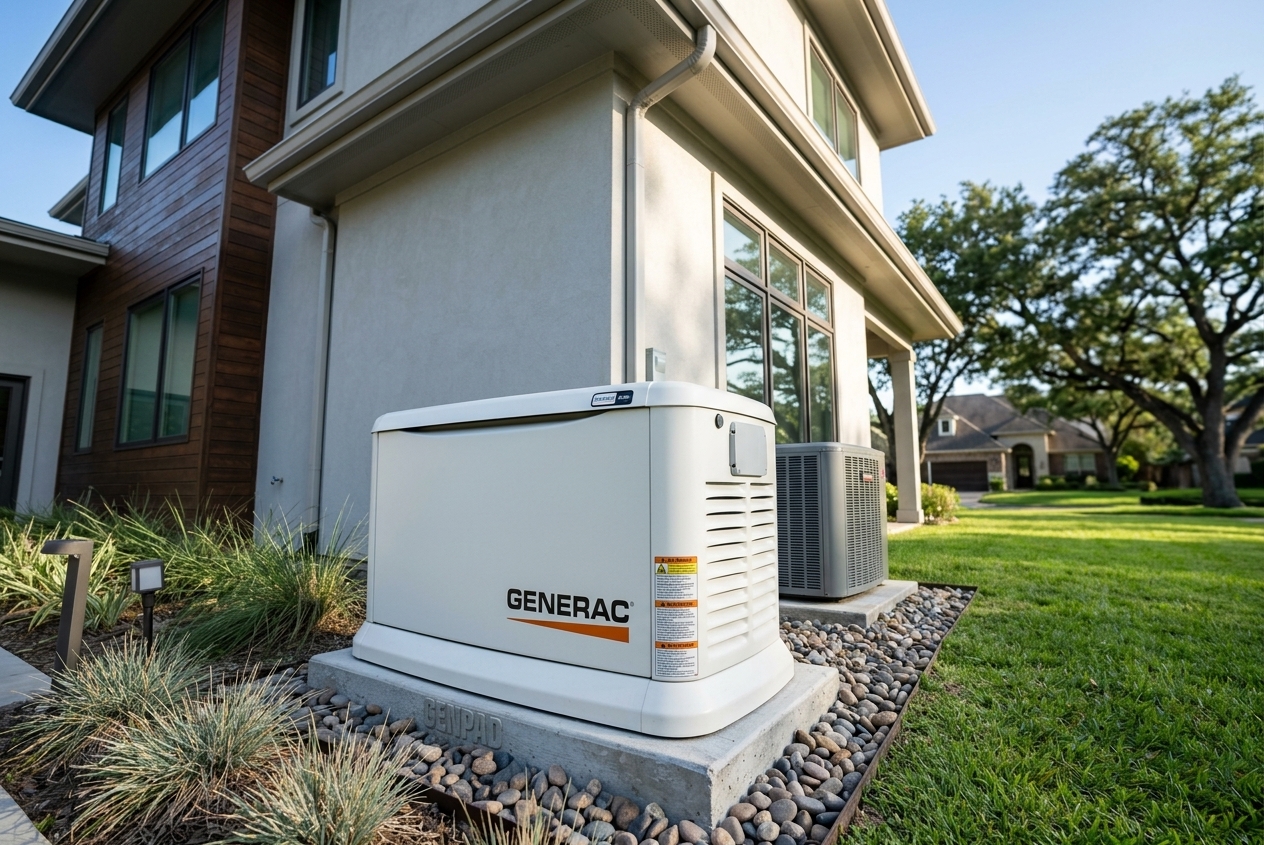
A whole-home standby generator is a permanently installed unit, usually set on a pad beside the house and fueled by natural gas or propane, so it never needs to be filled. It connects to your electrical system through an automatic transfer switch. When utility power fails, the switch senses the loss, the generator starts on its own, and within about 10 to 30 seconds the house has power again. When the utility comes back, the switch returns the house to the grid and the generator shuts itself down. You do not have to be home, awake, or able to lift anything for it to work.
That is the main difference from a portable generator, which has to be rolled out, fueled with gasoline, started by hand, and connected with cords or a manual transfer switch. A portable unit can keep a refrigerator and a few lights going. A properly sized standby unit can run the whole house, including the heating and cooling system, which in Columbia is the load that matters most.
The factors that tip the decision
The first question is how often you lose power and for how long. A household that loses power twice a year for an hour has a nuisance. One that has sat through two multi-day outages in the last five years has a pattern, and the pattern is what justifies the investment. If you are not sure, start keeping a simple log of outages and their length. Your memory of the last big one will be sharper than your memory of the short ones, and the log corrects for that.
The second question is who and what depends on power in your home. Anyone who uses oxygen, a CPAP machine, a powered wheelchair, or medication that must stay refrigerated has a medical reason for backup power, and that should factor heavily when making the decision. Older adults and infants also tolerate a 90-degree house in August and a 40-degree house in an ice storm poorly, which turns a comfort question into a safety one in this climate.
The third question is what else stops when the electricity does. Homes outside the city water system lose water entirely when the well pump loses power. Homes over a crawl space lose the sump pump that keeps the space dry, and a summer storm that knocks out power is usually the same storm that fills the crawl space. Electric water heaters, which are common in Columbia homes, stop heating. Anyone who works from home loses income for every day the power is out. Each of these is a reason the outage costs more than a few spoiled groceries.
Sizing it to your home
Standby generators for homes range from roughly 10 kilowatts, which covers essential circuits, to 22 kilowatts and up, which covers a typical whole house including central air conditioning. Sizing matters more here than in cooler climates because of the way Columbia homes heat. A heat pump uses electric auxiliary heat strips on the coldest nights, and those strips can draw 10 to 20 kilowatts on their own, which is more than the air conditioner needs in summer. A generator that runs the house comfortably in July may not carry the heat strips in a January ice storm unless it was sized for them or the system uses load management to shed them. A technician calculates this from your actual equipment rather than from square footage, and the calculation is part of a whole-home generator installation estimate.
What installation involves and what it costs
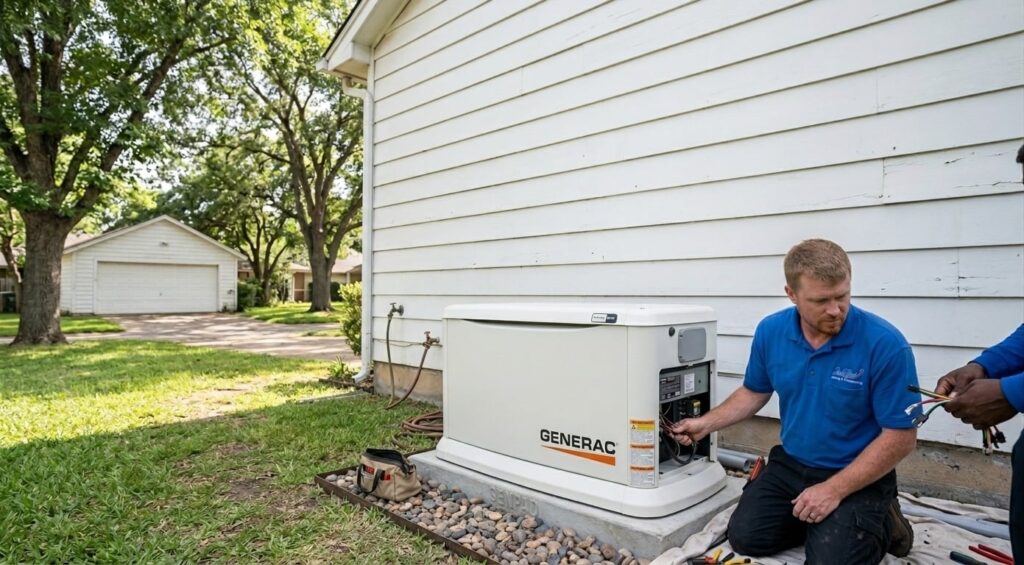
The price of a whole-home generator has three parts: the unit itself, the electrical work to install the transfer switch and connect it to your panel, and the fuel connection. Homes with natural gas service run a new gas line to the unit. Homes without it install a propane tank, which adds cost and a refill schedule. Installation also requires a permit, a concrete or composite pad, and an inspection, so the process takes weeks rather than days, and it does not happen the week a hurricane is in the forecast. That is why fall and winter, after storm season and before the summer thunderstorms return, are the practical windows to plan one.
Once installed, the generator runs a short self-test each week and needs an annual service, with an oil change and inspection, to stay ready. Skipping that service is the most common reason a standby generator fails to start when it is finally needed. Many homeowners spread the cost of the system over time; financing options are available for generator installations.
Talk it through with numbers
2nd Wind Heating & Air Conditioning installs and services standby generators across the Columbia area. If you are weighing one, the useful next step is an in-home consultation, where a technician reviews your outage history, your medical and household needs, your heating and cooling equipment, and your fuel options, and then gives you a firm price for a properly sized system. You can schedule that online or through the 24/7 chat on our website. Whichever way the decision goes, you will make it with the numbers for your house rather than a guess.