

Comfort in a home is made of small things: the bedroom temperature at night, how the air feels in August, whether the shower has pressure, whether the house smells clean. When those things slip, most people adjust rather than investigate. They add a fan to the warm room, take shorter showers, buy an air freshener. Each is a workaround for a maintenance item that was put off, and each is fixable. This post connects those problems to the maintenance behind them and what changes when it gets done.
The room that is never the right temperature
Almost every house has one: the bedroom that is warm in summer and cold in winter regardless of the thermostat. The cause is airflow, and the maintenance behind it is usually one of three things. A duct in the attic has separated at a joint or lost its insulation, so the air reaching that room has been heated or cooled by the attic on the way. A dirty indoor coil or a failing blower is moving less air than the system was designed for, and the farthest room feels it first. Or the filter has not been changed in months. A maintenance visit measures airflow and static pressure and finds which, and an air duct repair or a cleaned coil usually brings the room back.
The house that feels sticky at 74 degrees
Columbia’s humidity is the reason a house can be cool and uncomfortable at the same time. An air conditioner removes moisture only while it runs in long, steady cycles. A system that short cycles because of a dirty filter, a dirty coil, or a low refrigerant charge cools the air without running long enough to dry it, and the house reaches the set point with the air still damp. Sticky floors, condensation on windows, and a musty smell in closets in midsummer are the signs. Maintenance that cleans the coil and corrects the charge restores the long cycles, and in homes that stay damp anyway, a whole-home dehumidifier does the rest and lets you set the thermostat higher without feeling it.
The dust, the allergies, and the smell
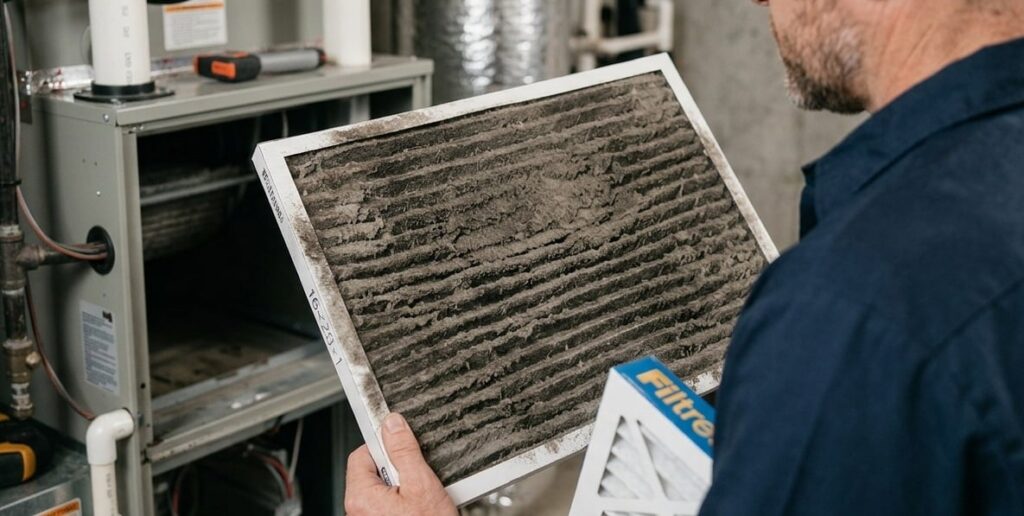
A house that feels dusty a day after cleaning, allergies worse indoors than out, and a musty smell cleaning does not remove are air quality problems, and the maintenance behind them is in the ductwork and under the house. Ducts that have not been cleaned in years redistribute what has settled in them every time the system runs. A crawl space that stays damp feeds moisture and spores into the ducts that pass through it. An overdue filter, or the wrong grade, lets through what a fresh one would catch. Regular filter changes, a duct inspection, and a look at the crawl space address the sources rather than the symptoms.
The shower that runs weak or cold
Showers get a little shorter as the water heater’s recovery slows and a little weaker as pressure drops, and people adjust without noticing. The heater side is usually sediment, which builds up on the bottom of the tank and slows heating, and an annual flush restores much of the lost capacity; a heater past ten years that runs short is telling you its replacement is near. The pressure side is a failing regulator, a partly closed valve, or corrosion in older pipes, and a water pressure assessment finds which. Both fixes are routine, and both change the first five minutes of every morning.
The system you can hear from the other room
Heating and cooling equipment gets louder as it ages, and homeowners stop hearing it until a guest mentions it or it starts waking someone at night. Rattling is a loose panel or a blower wheel out of balance. Squealing is a motor bearing. A loud start at the outdoor unit is a compressor struggling on a weak capacitor. Each is a maintenance finding, and a tuned-up system runs noticeably quieter, which people rarely ask for and always notice.
The bill that keeps climbing
Comfort includes not dreading the power bill, and a system that has missed maintenance costs more every month. Dirty coils, a low charge, a clogged filter, and leaking ducts each make the system run longer for the same result, and in a six-month cooling season those hours add up. Homeowners who finally have a neglected system cleaned and charged often see the difference on the next bill.
The outage you are braced for
For homes with a standby generator, comfort includes not worrying about the next storm. A generator that has not been serviced in a year or two is one you are hoping will start, which is a different feeling from knowing it will. Annual generator service with a load test replaces the hope with a result, and for homes without one that lose power often, installing one before the next ice storm rather than after it.
Staying ahead of it
The practical steps are the ones that keep appearing above. Change the filter monthly during cooling season. Have the heating and cooling system tuned up in spring and fall, with the coils cleaned each time. Flush the water heater yearly and know its age. Look under the house twice a year. Service the generator annually. The Cloud 10 Membership puts the two tune-ups on the calendar each year, includes indoor and outdoor coil cleaning at every visit, and moves members ahead when the summer schedule fills, which removes the reason these items got put off.
Get the comfort back
2nd Wind Heating & Air Conditioning has served greater Columbia since 1985. If your home has a room, a shower, or a smell you have been working around, schedule a maintenance visit online or through the 24/7 chat on our website. The technician will find the item behind it, show you on video, and quote the fix before doing anything, and most of what is on this list is smaller than the workaround has been.