
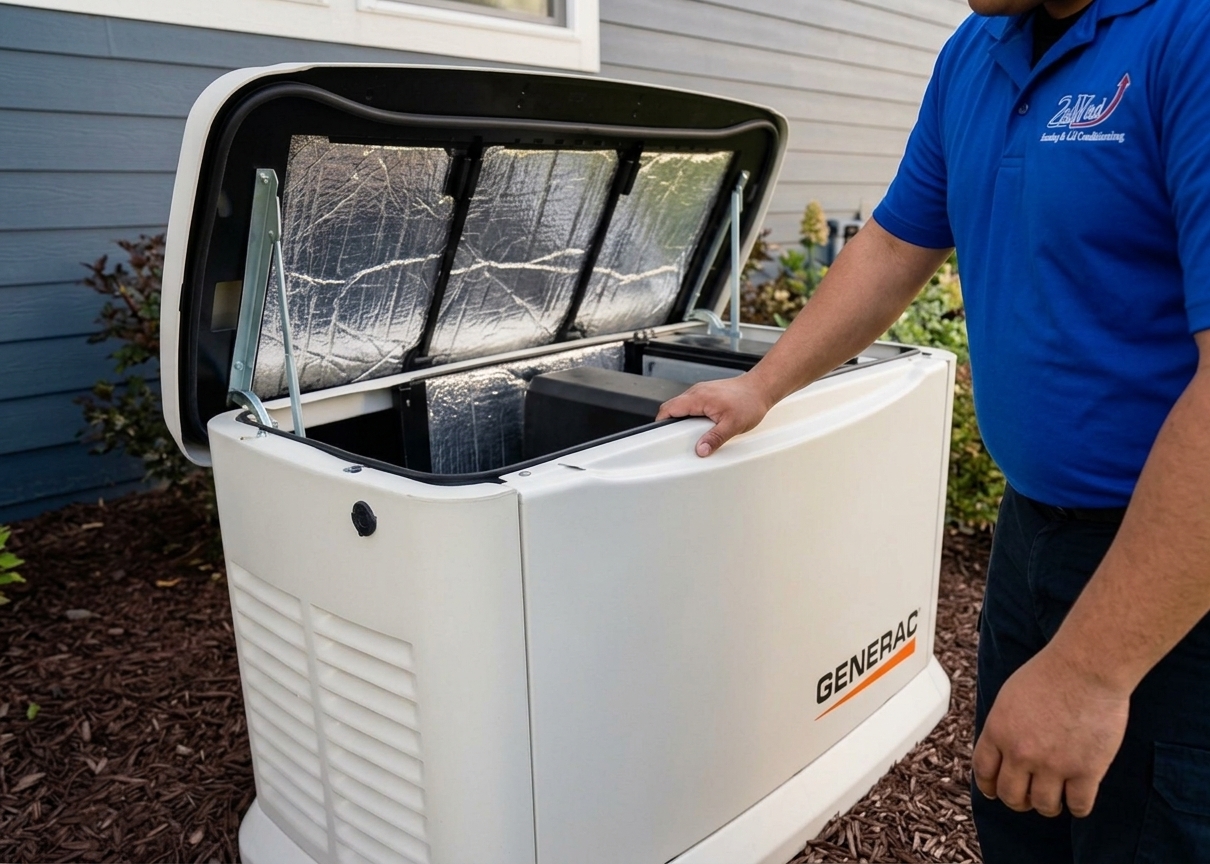
A standby generator is the one system in your home that you cannot test by living with it. It sits outside for months doing nothing, and then a summer thunderstorm or an ice storm asks it to start on the first try and run for days. Whether it does depends almost entirely on the maintenance it received while it was sitting. The signs below are how a generator tells you that maintenance is overdue. Some are visible from the kitchen window, but others you will only notice if you know to look.
You have not heard the weekly self-test
A standby generator runs a short exercise cycle every week to keep the engine lubricated and the battery charged. Homeowners learn to hear it and then stop noticing it. If you think about it and cannot remember the last time you heard the generator run, go check the controller. A unit that has stopped exercising, or that has been trying to start and failing, has a dead battery, a fuel supply problem, or a controller fault, and any of those means it will not start in an outage either. This is the most important sign on the list, because it mimics a generator in perfect health.
A warning light or a message on the controller
Every standby generator has a controller with a display or a set of indicator lights. Green means ready. Yellow or amber means maintenance is due or a minor fault has been logged. Red means the unit has a fault that will keep it from starting. People walk past yellow for months, and yellow is exactly when service is cheap. Common messages include low battery, service due based on hours or calendar, and overcrank, which means the engine turned over but did not catch. Take a photo of any message and have it addressed rather than clearing it, since clearing a fault does not fix what caused it.
Hard starting, slow cranking, or repeated attempts
If you happen to hear the self-test and the engine cranks slowly, or tries two or three times before it catches, the battery is weakening. Generator batteries typically last two to four years, and Columbia’s summer heat is hard on them, so the top of that range is optimistic here. A battery that starts a warm engine in a weekly test will often fail to start a cold one in a January ice storm. Battery replacement is a routine part of generator service, and it is far cheaper than discovering the problem with the power out.
Rough running, surging, or smoke
When the generator does run, it should settle into a steady hum within a few seconds. An engine that surges up and down, runs rough, or produces visible exhaust smoke is telling you about the fuel system, the air filter, the spark plugs, or the oil. On a natural gas or propane unit, a fuel pressure problem at the regulator or supply line can show up the same way. Any of these will get worse under a full load, which is the load the generator exists for.
Oil, leaks, and the hours meter
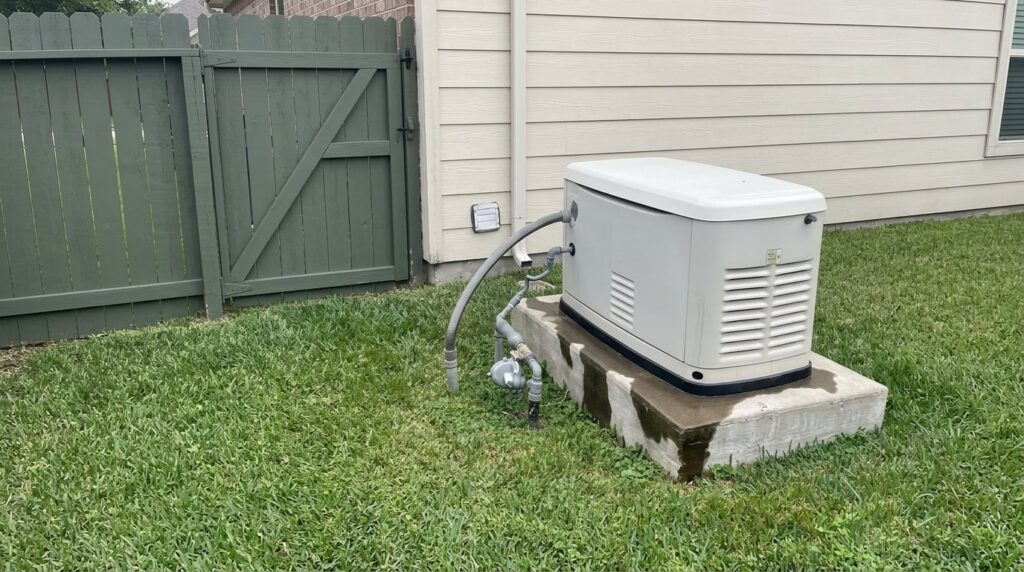
Look at the ground around the unit and the inside of the enclosure for oil or coolant. A small leak grows, and an engine that runs low on oil during a multi-day outage will shut itself down on low oil pressure, or damage itself if the sensor has failed. Then check the hours meter on the controller. Most manufacturers call for an oil and filter change at least once a year, and sooner after a long run. A generator that ran for three days during last year’s outage used most of its interval in one week, and if it has not been serviced since, it is running on that oil now.
Nests, corrosion, and debris
The enclosure on a standby generator is warm, dry, and out of the weather, which makes it attractive to mice, wasps, and in this part of the country, fire ants, which are drawn to the electrical components and can foul the controller. Pine straw and leaves collect against the intake and exhaust louvers. Columbia’s humidity corrodes battery terminals and electrical connections over a few seasons. None of this is visible from the house. Open the enclosure a couple of times a year, or have it opened during service, and look.
It carried you through the last outage
The final sign is one people miss because it feels like good news. A generator that ran for days during the last storm did more work in that week than in the previous year of self-tests combined. It consumed oil, wore the air filter, ran the battery through repeated cycles, and may have logged faults you never saw. The right response to a generator that performed well is to service it before it is asked to perform again.
What annual service covers
A generator maintenance visit changes the oil and filter, replaces the air filter and spark plugs as needed, tests the battery under load, checks the fuel supply and pressure, inspects the enclosure for pests and debris, tightens electrical connections, reviews the controller’s fault log, and runs the unit under a full load rather than the light load of a self-test. Our generator service visits follow that sequence, and the technician records video of anything that needs attention so you can see it before approving the repair. Members of the Cloud 10 Membership receive a discount on generator equipment.
Schedule it while the weather is calm
2nd Wind Heating & Air Conditioning installs and services standby generators across the Columbia area. If your generator is showing any of the signs above, or if you cannot remember its last service, schedule a visit online or through the 24/7 chat on our website. The best time to find out whether a generator will start is a calm afternoon in October, not the first night of an ice storm.