
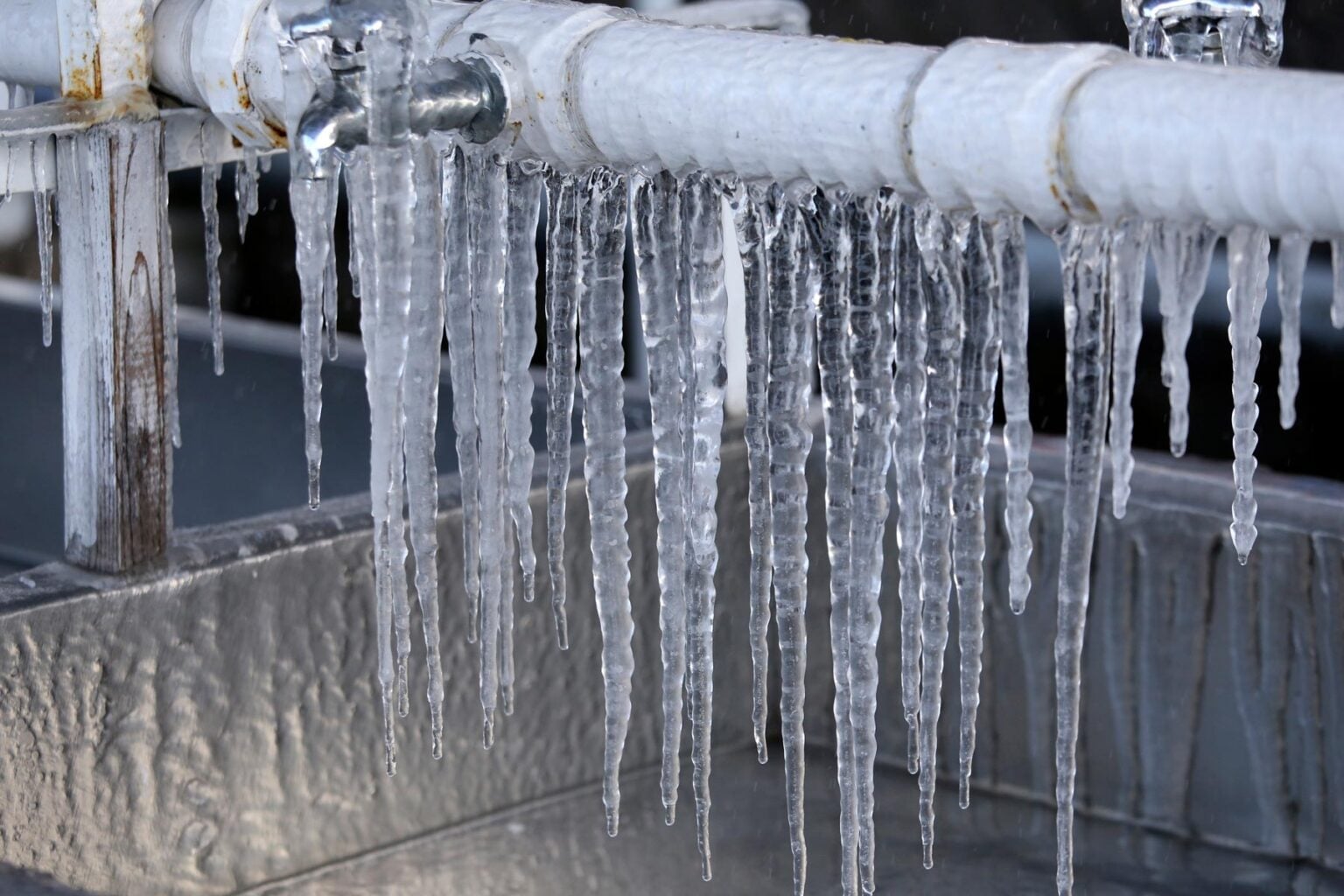
Columbia does not get northern winters, but that doesn’t mean that we don’t get frozen pipes. Temperatures drop below 32 degrees on only a handful of nights each year, usually for a night or two after a mild afternoon, and homes built for a hot climate were never designed to keep water lines warm through that. A pipe needs just one night at a hard freeze to split, and the water damage that follows is among the most expensive repairs a homeowner can face. This post explains where the risk sits in a Columbia home, what to do before a freeze, and what to do if a pipe freezes.
Why a mild climate makes pipes more vulnerable
Water expands as it freezes. Inside a closed pipe, that expansion builds pressure between the ice plug and a closed faucet until the pipe wall or a fitting gives way. The split usually happens somewhere downstream of the ice rather than at the ice itself, and the leak often stays hidden until the ice thaws and water starts moving again, which is why so many burst pipes are discovered the afternoon after a freeze rather than during it.
In colder regions, water lines run through heated space and are insulated by code. Around Columbia, supply lines commonly run through unheated crawl spaces, attics, garages, and exterior walls, often with no insulation at all, because a freeze is rare enough that nobody planned for one. Add the local pattern of a warm day followed by a hard overnight freeze, and you have pipes that go from 60 degrees to 25 in a few hours with nothing between them and the cold.
Where to look in your home
The pipes that freeze in Columbia are almost always in the same few places. Outdoor spigots and the short run of pipe behind them go first. Lines in the crawl space come next, especially near open vents or gaps in the foundation where wind blows through. Pipes in exterior walls, including the ones under kitchen and bathroom sinks that sit on an outside wall, freeze when cabinet doors stay closed and block the warm room air. Attic lines, water heater supply lines in a garage, and the pipe feeding an irrigation backflow preventer round out the list. It is worth walking your home once in the fall and noting every pipe you can see in an unheated space, because that list is what you will work from below.
What to do before a freeze
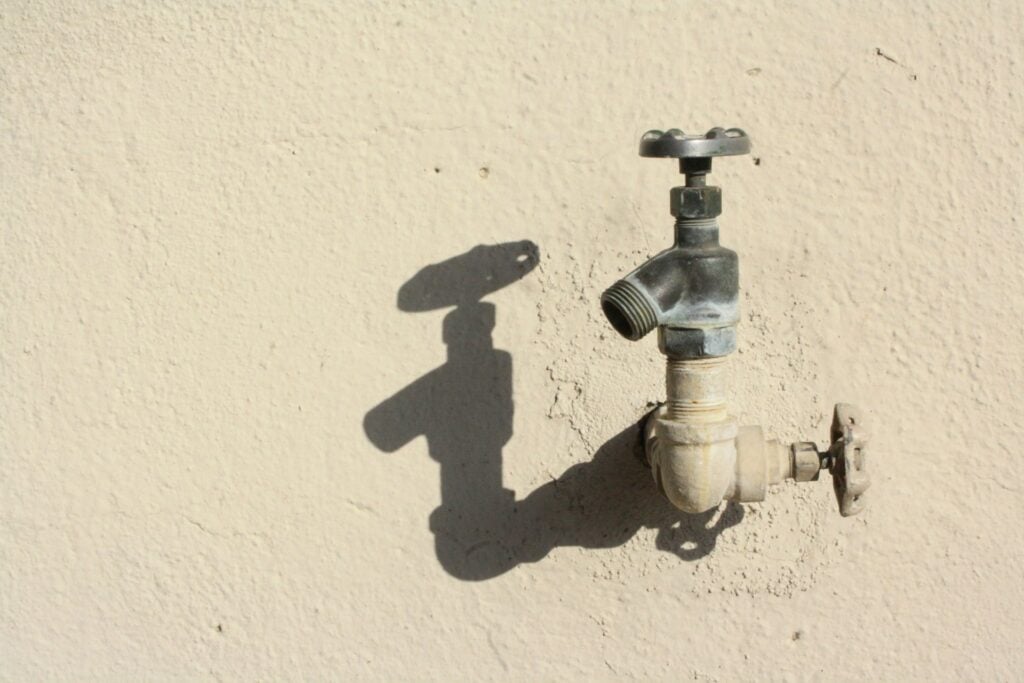
Preparation splits into work you do once in the fall and steps you take on the day a freeze is forecast. In the fall, disconnect and drain garden hoses, put insulated covers on outdoor spigots, and wrap every exposed pipe in the crawl space, garage, and attic with foam pipe insulation. Close the crawl space vents and seal the gaps around pipe penetrations, dryer vents, and the foundation with foam or caulk so cold air is not blowing directly across the lines. Shut off and drain the irrigation system while you are at it.
When the forecast calls for temperatures in the 20s, open the cabinet doors under sinks on exterior walls so heated air can reach the pipes, and keep the thermostat at 55 degrees or higher overnight, even if the house is empty. Let a faucet at the far end of the house drip slowly. Moving water is far harder to freeze, and an open faucet relieves the pressure that splits a pipe. If you leave town during a cold stretch, shut off the main water valve and open a faucet to drain the pressure from the lines. A house that sits empty through a freeze with the water on is how a small split turns into a flooded first floor.
If a pipe freezes anyway
A frozen pipe announces itself as a faucet that produces a trickle or nothing at all, often with frost on the visible section of pipe. Leave that faucet open, then warm the frozen section slowly with a hair dryer, a heating pad, or towels soaked in hot water, working from the faucet end back toward the ice. Never use a torch, a heat gun, or any open flame on a pipe! As the ice melts, water will start to flow, and the open faucet gives it somewhere to go.
If you find a pipe that has already split, or you hear water running where it should not be, close the main shutoff valve first and open faucets to drain the lines. Then call for frozen and burst pipe repair. Our technicians locate the break, replace the damaged section, and check the rest of the run for other splits that have not started leaking yet, since a hard freeze rarely damages just one spot. Some older homes have galvanized steel or polybutylene supply lines, the latter being a gray plastic pipe common in homes built from the late 1970s through the mid 1990s. If those lines have frozen more than once, the technician will walk you through whether repiping the vulnerable runs makes more sense than repairing them one freeze at a time.
Repairs on the same day for Columbia homeowners
2nd Wind Heating & Air Conditioning provides same-day emergency service for burst pipes and other plumbing failures. If you hear water running behind a wall or see a wet ceiling after a freeze, shut off the main valve and then reach us by phone, online scheduling, or the 24/7 chat on our website. The technician who arrives will show you the damaged pipe on video before recommending the repair, so you know what you are paying for and why.