
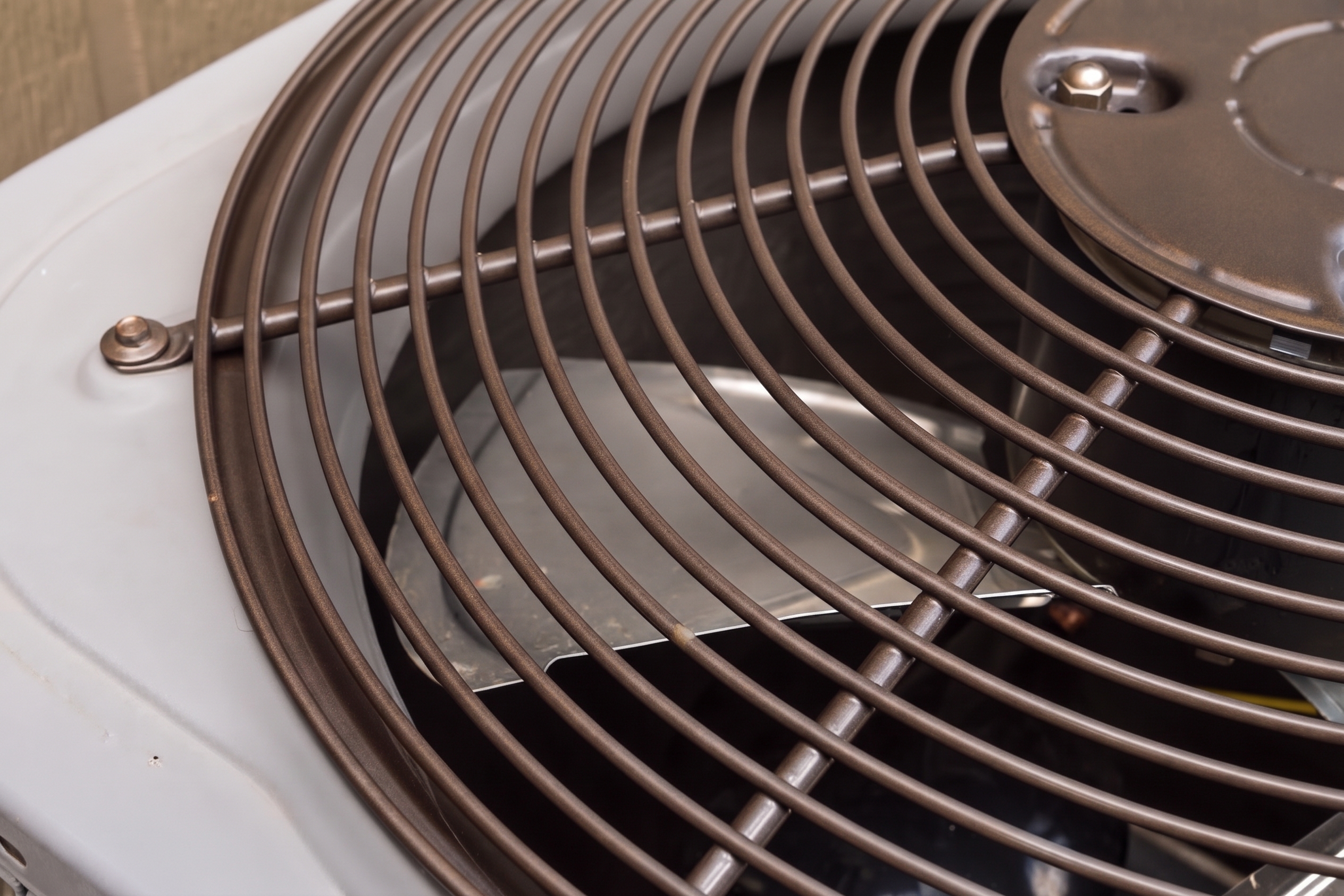
An air conditioner that stops doing its job in Columbia gets noticed within the hour. Before you call, it is worth five minutes at the thermostat, the breaker panel, and the outdoor unit, because a meaningful share of no-cooling calls turn out to be a more straightforward solution than it may seem. If you want to learn more about your issue before calling for professional assistance, find your symptom, check what you can, and know what the technician will be looking for if the problem is beyond a reset.
The system runs, but the air is not cold
Start with the thermostat: confirm it is set to cool, the set point is below the room temperature, and the fan is on auto rather than on, since a fan running constantly blows unconditioned air between cooling cycles. Then check the filter. A filter clogged with dust and pet hair chokes airflow, and a system starved of air cannot cool the air it moves. Outside, make sure the unit is running and is not buried in pine straw, leaves, or overgrown shrubs, since the outdoor coil cannot shed heat if it cannot pull air through. If none of that helps, the causes a technician looks for are a low refrigerant charge from a leak, a dirty indoor or outdoor coil, a failing compressor, or a duct that has come apart in the attic and is pumping cold air into 130-degree space.
The system will not turn on at all
A completely dead system is often a power problem rather than an equipment problem. Check the breaker panel for a tripped breaker labeled air conditioner, condenser, or air handler and reset it once. If it trips again, leave it off, because a breaker that keeps tripping is protecting you from a fault in the equipment. Check the disconnect box mounted near the outdoor unit, which someone may have pulled during yard work. Check the thermostat for dead batteries or a blank display. And look for a float switch on the indoor unit, a small device on the condensate line that shuts the system down when the drain backs up. If the drain pan is full, that switch is why the system is off, and clearing the drain is the fix. Beyond those, a dead system points to a failed capacitor, contactor, transformer, or control board, each of which is a routine air conditioning repair.
The outdoor unit hums or clicks but the fan does not spin
A humming outdoor unit with a still fan is almost always a failed capacitor, the small cylinder that gives the motors their starting jolt. Do not try to start the fan by hand; the compressor is trying to start on the same weak capacitor and will fail if it keeps trying. Turn the system off at the thermostat to protect the compressor and schedule the repair. A repeated loud click with no start points to the contactor, the relay that sends power to the compressor. Both are inexpensive parts, but both can cost the amount of a new compressor if ignored.
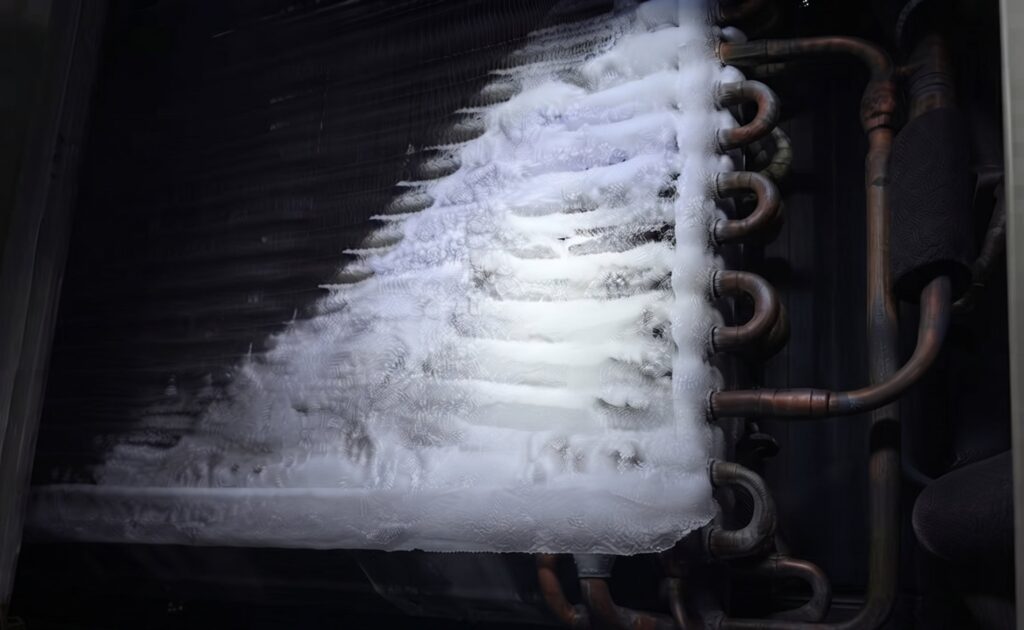
Ice on the refrigerant lines or the indoor coil
Ice on a cooling system in July is common. It means the indoor coil got cold enough to freeze the moisture in the air, and the two usual reasons are restricted airflow, from a dirty filter or a blocked return, and low refrigerant, which lowers the coil temperature below freezing. Turn the system off and let the ice melt completely, which can take several hours, then replace the filter and try again. If the ice returns, the cause is refrigerant or a coil problem and needs a technician. Running the system while it is iced pushes liquid refrigerant into the compressor and can destroy it, so take caution.
Water around the indoor unit
Air conditioning pulls gallons of water out of Columbia’s air every day, and all of it drains through a small condensate line that clogs with algae over a wet six-month season. Water in the drain pan, water on the floor, or a stain on the ceiling below an attic unit means that line is blocked or the pan has cracked. If the system is still running, turn it off before the water finds the ceiling. Clearing the line is a routine service item, and adding a float switch, if the system does not have one, keeps a future clog from becoming water damage later on.
The system runs constantly and never catches up
On a 98-degree afternoon, an air conditioner running continuously is not necessarily broken. Systems here are sized for design conditions around 95 degrees, and above that they run without pause and hold the house a few degrees warmer than the set point. That is normal. What is not normal is a system that runs constantly on an 88-degree day or cannot get the house below 80. That points to low refrigerant, dirty coils, a leaking duct, a failing compressor, or a system that was undersized on the day it was installed, and the technician’s measurements will show which.
New noises or smells
The odors or smells your system produces can be telling here. Grinding or squealing is a motor bearing failing. Banging or rattling is a loose or broken part inside a unit. A hissing or bubbling sound near the refrigerant lines is a leak. A musty smell when the system starts is growth on the indoor coil or in the drain pan. A burning or electrical smell is a reason to shut the system off at the breaker and call the same day.
Same-day repair when the checks do not fix it
2nd Wind Heating & Air Conditioning offers same-day emergency service when the air conditioning fails. Same-day emergency service applies to residential properties only. Schedule online, call, or use the 24/7 chat on our website, and a trained technician will find the cause, show you the failed part on video, and give you the repair options with prices before any work starts. Members of the Cloud 10 Membership move to the front of the line when the first heat wave fills the schedule.